Do You Get Me? Writing from another person’s perspective.

“The characters were so believable!”

This is a compliment any fiction writer would love to hear.

To craft memorable stories, the writer needs to enter the mind and heart of her characters and then bring them to life on the page.

How do you do this?

You can find excellent guide books on this fascinating topic. For starters, I’l offer key traits a writer should cultivate when trying to get into someone else’s head.

Curiosity

Intuition

Imagination

Open-mindedness

Listening skills

Empathy

Sensitivity

Notice how this list applies to our real life relationships? 

Imagine how such skills and practice could shape our present day divisions.

While one can never truly know another, the quest to do so—and to be seen ourselves—drives us.

Sometimes to love and madness. 

Try putting yourself in my shoes, for a change.

You just don’t understand.

Are you crazy?

She can read my mind.

He really gets me.

It’s easier to write characters with a similar perspective, background, and age as yourself. But to stick with that limits the scope of your creative work. Plus, it’s boring!

Writers who wrote outside their own boundaries brought us great literature from Henry James to Agatha Christie. Men transporting themselves into a woman’s head and vice versa.

Nabokov wrote Lolita in the voice and mind of a murderous pedophile.

The best-selling novel, Curious Incident of the Dog in the Night-time, (Mark Haddon) is narrated by an autistic teen.

Let’s consider age.

I am all the ages I have ever been. ~ Anne Lamott

In Room, Emma Donoghue narrates the book through the eyes of a 5 year old boy being held captive in a small room along with his mother.

J.D. Salinger’s inner 17-year-old, Holden Caulfield, catapulted Catcher in the Rye to classic fame. 

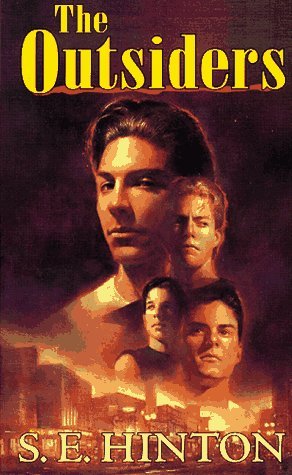
My middle-school students were always shocked to learn that cult fav, The Outsiders, narrated by a 16 year old boy, was penned by a teen-aged girl.
Beloved children’s author, Judy Blume, now age 83, attributed the success of her children’s books to her ability to access her inner child. “I’m still like an 11 or 12 year old inside,” she told an interviewer.

How about writing in an age you have yet to be ?

Marilynne Robinson’s, Pulitzer-Prize winning Gilead is a diary from a 76 year old preacher to his young son.

I’ve written stories from the perspective of a confused middle-aged man, a 25 year old exotic dancer, and a 9 year old fire starter. My current project features an almost 12 year old roller coaster enthusiast. To capture her essence, I read childhood diaries, studied old photos, and visualized my 6th grade self.

But it’s the spirit of a 15 year old girl that comes most naturally. Perhaps because 15 was a pivotal year in my life. I also work with teenagers, so I get to know them up close. 

My recently published short story, “My Father’s Messiah”, is about a 15 year old orthodox Jewish girl who worries her widowed father may be losing his mind.

I am honored to be awarded the First Prize in the Katherine Paterson Award for Young Adult Literature. Thank you to Hunger Mountain Journal and Vermont College of the Fine Arts.

It begins like this:


Every school morning, my father wakes me the same way: he yanks open my blinds, slaps his hands together, and says, “Boker tov, beautiful daughter. Time to rise and serve your Creator.” 

Once upon a time, I didn’t need wake-up calls. I bounced out of bed as if each day delivered a surprise package. When I was five, I might have found my father’s routine cute, but now my fifteen-year-old brain barely registers Abba’s words. Instead, I hold onto my last dream before it morphs to reality.  

“And who knows?” my father booms. “Today might be the day the Messiah comes!”

He says this says every morning. No joke. 


You can read the story here

What is your inner age?
The Power of Poetry

April 2021 marks the 25th anniversary of National Poetry month.

The honorary month was first created by the Academy of American Poets in partnership with Jonathan Galassi, President of Farrar, Straus & Giroux in 1996.

Poetry has been my pandemic companion. Comfort, connection, and inspiration.

With spring comes hope. Let’s celebrate!

Join me in spirit at the Academy’s first virtual gala celebration, Poetry & The Creative Mind. Enjoy an evening championing the power of poetry in our culture and lives.

Date: Thurs., April 29th, 7:30 pm. Event chair, Meryl Streep.

Registration free. Donations appreciated. Proceeds go toward poetry education programs and materials for classroom teachers. Register here.

* * *

Share a poem for Poem in Your Pocket Day on April 29, 2021,  #PocketPoem.

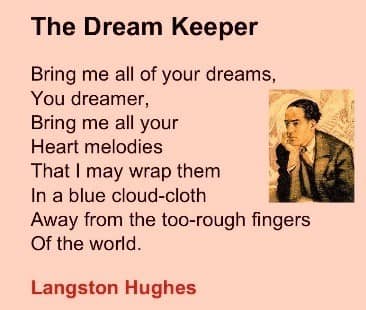
Here are two poems for you, dear reader.

Which poems bring you comfort?

#Coronaversary. What have you learned one year later?

What have you learned from the pandemic year?

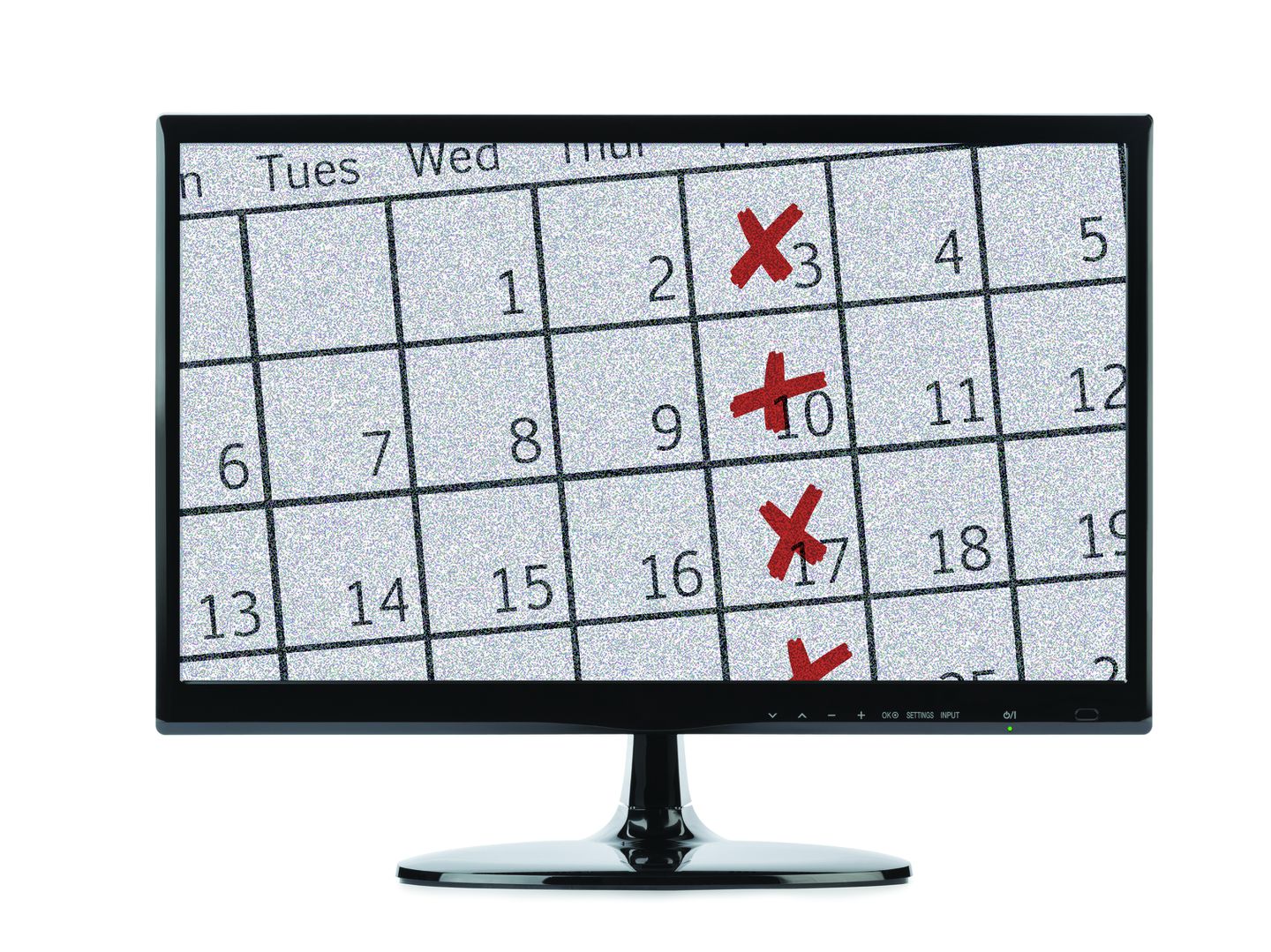
When was your last “normal” day?

What were you doing when the world turned upside down?

For me that was Friday, March 13th 2020.

Like toppling dominoes, one cancellation piled atop another. Our public school went remote. Our synagogue cancelled Sabbath services. Our town library closed. My gym and dance studio closed. An up-coming business trip was cancelled. My private students cancelled their lessons. My daughter came home from college (thinking it would be a few weeks).

Oh, and my son’s engagement party was planned for that weekend. 

I’m glad I didn’t know how long the doom would last. How many lives would be lost.

There is hope now. But our world is different. You are different. Hopefully, you’ve gained some things amidst all the losses. 

***

I learned the primacy of relationships over work and ambition. 

I learned that absence makes the heart grow fonder and stronger.

I learned how much I miss my grandchildren.

I learned that children are better mask-adapters than adults. 

I learned it’s okay to sit in the car and cry.

I learned to surrender to uncertainty.

I learned to expect plans to change. 

I learned how to teach lessons over Zoom. 

I learned we can build bridges with words.

I learned words I wish I didn’t have to utter: lockdown, social-distancing, aerosols, quarantine, asymptomatic, fomites, super-spreader…

I learned that family members can hold vastly different beliefs from me. 

I learned that when things are looking really bad, look toward the heavens. 

I learned just how wise my young adult children have become.

I learned that writing can sustain me.

I learned what I can and cannot live without.

I learned just how lucky I am. ~

Love Lessons in the 6th Grade

He was a quiet boy with dark hair and thick, black-framed glasses who spent more time reading than chasing girls on the playground.

I was one of those popular girls with a new boyfriend each week.

This quiet boy and I inhabited different planets, sharing a sixth grade teacher but not much more. Until our class Valentine’s Day party. 

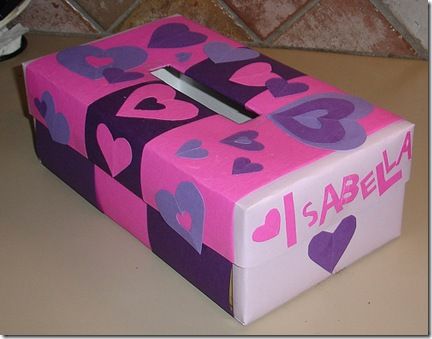
While the midwest winter frosted our classroom windows, the air inside heated up with preteen energy. The main party event was exchanging store-bought Valentine cards (following the required “one for everybody” rule.)  We achieved this with efficiency by depositing our 25 valentines in personalized shoeboxes sitting on each kid’s desk.

The best valentines went to the cool kids. If you really liked someone, you’d write a special message inside, or maybe decorate the envelope. If you were lucky, an admirer attached a few NECCO Sweetheart candies imprinted with sayings like Hot Grl, Call Me, or XOXO. 

In the midst of the party, I stood chatting with two other girls in my solar system when the quiet boy stealthily entered our domain.

“Excuse me, Evelyn?” 

I turned to look at the questioner.

Poker faced, the quiet boy blinked a few times. Then, like a magician, he pulled from behind his back a large, heart shaped box adorned with lace and roses.

“This is for you. Happy Valentine’s Day.”

I remember utter shock. Then…delight.

My girlfriends’ jaws dropped.  I’m pretty sure the rest of the room quieted, too. 

For the first time, I noticed the boy’s smile. Then he returned to his desk.

When I got home that day, I showed my mother the red satin candy box, a first of its kind for me.

“Wow, he must sure like you,” she said.

“But he’s never said a word to me!”

This was the first of many lessons I needed to learn about love. And boys. 

His name was Michael.

For the next two weeks, I relished those delectable chocolates, allowing myself a single one each day.

Then came an invitation to visit Michael’s house. I accepted.

He seemed to have planned out the afternoon which began with him making me a vanilla milkshake. I don’t think I’d ever had a boy prepare food for me. I sat on the bar stool as he garnished the drink with whipped cream and sprinkles.

He then played us a Bill Cosby record. Michael laughed at the stand-up routine. I didn’t know who Bill Cosby was, nor did I fully get his jokes. After that, Michael asked me things about myself. What did I like to do? To read?  We talked for a while. Then, would I like play Stratego or chess?

This boy was twelve going on twenty.

I can’t remember if I shared his romantic feelings. Certainly it felt nothing like the intense crushes I’d experienced before.  Perhaps we held hands at some point.

I don’t remember much happening between us at school. Maybe it was summer when we went to the movies (his nice mom sitting a few rows behind us).

Another time we went bowling. Of course he had his own bowling ball. I could barely lift the thing. He taught me how to keep score. Afterwards, he bought me Cracker Jacks and a Coke. While we snacked, Michael told me he especially loved my smile and long shiny hair. I felt both embarrassed and flattered.

I moved away at the end of the summer and never saw Michael again.  But I held on to that empty red box for a long time.  

And, every February since then, when the stores fill with heart-shaped candy boxes, I’m reminded of that brave boy who made the first move toward a girl from another planet.  

Postscript:  Decades later, Michael tracked me down online. 

But that’s another story. ~

Closing Chapter 2020

You made it!

Ten months of pandemic living. Through losses and suffering. Bravo!

Hopefully you’ve managed to dodge the COVID bullet so far, or maybe you were lucky to recover.

If you’ve lost a loved one to this terrible virus, I offer a virtual hug and prayer for healing. 

Thank you to those who’ve reached out to me privately. I’m okay. Anxiety and stress are creativity killers. Throw in a pandemic, a contentious election, remote schooling, job and family matters, dooms day news… who wouldn’t feel wordstuck?

We’re all relieved to close Chapter 2020, but the story is far from finished. There will be dark moments for us all to pass through as we turn the page.

Yet, hope now shapes the final chapter of this sad story.  

As it happens, the end of 2020 coincides with my writing the final chapter of a novel-in-progress: a project that has taken too long for my liking. COVID time only deepened the chasm between my vision and its outcome.

When the warm weather finally arrived during Boston quarantine, my despair lifted. I became determined to see the project through. I tried to show up each day whether my muse accompanied me or not.

Somedays, I wrestled with words until my head ached.

Some days, I spent hours trying to spin chaos into order.

Some days, I was left with a mess I didn’t know how to clean up. 

And some days, the jumble of words magically lined up, like a string of pearls for me to polish. 

Still, I have no idea whether this book will see the light of day.

There is editorial interest and a grant backing me—a welcome vote of confidence. Yet the road ahead, like our New Year, remains uncertain. I have no control over the publishing market, or the particular tastes of an agent.

Luck factors in, too.

What I do have control over is the shape of my story—making it the best story possible. I can rewrite the beginning as many times as I see fit. The story’s ending is mine to tinker with until it feels right—“surprising, yet inevitable”.

We cannot write our own ending to the pandemic story. What we can do is try to write our own new chapter by focusing on taking good care of ourselves. 

We can nourish our souls with art, music, words, and nature.

We can reflect on what matters most to us now.  We can make revisions. We can get rid of the fluff—those details that no longer serve our story.   

Writing and revising is a lonely endeavor.  We need the support of others to offer encouragement and direction. 

So, as you begin Chapter 2021, be sure to look for kindred spirits, whether nearby or over the virtual bridge, who will help you write the best story possible. ~