Could You Save A Life?

Do you know CPR? Could you save a life?

It can happen in a split second.

You’re going about your ordinary day only to be thrust into extraordinary circumstances.

Life and death.

A child. Blue lips. Screaming parents. Sounds you’ve never heard and hope never to hear again.

Your body reacts before your mind. Your hands take over compressing the little girl’s chest. Breathe your essence into her. One, two, three…

You’re pretty sure she’s gone, yet you stay calm amidst the chaos circling the room.

You believe in miracles.

After what feels an interminable wait, the paramedics arrive. You step aside as they take over, whisk the child away. 

The hysteria unfolds outside the house where the October sky is too beautiful for tragedy.

October 202

You recognize the shock in the mother’s face. You know what is happening to her brain and body because you have been there before. So you stay, try to steady her, speak gently, hold her, run through the house to find her shoes, help her go with the ambulance.

You answer the police officer’s questions. You notice his moist eyes. Now you are shaking. He takes you home, thanks you for being there, tells you to take good care of yourself.

But it is not you who needs care. You will be okay.

The child’s parents will remain in the After–a place you have lived in–never ever the same. 

This is what haunts you.

Their little girl doesn’t come home.

***

You reflect, of course. Try to make meaning of what happened before breakfast on a bright ordinary morning. Why you, of all people, were there at that right/wrong moment. You with the anxious brain prone to panic.

Later you will learn that there was nothing the parents, or you, could have done at that point to save the child. There were underlying circumstances. No one was at fault.

Of course there are no guarantees. Minutes matter. Often it is too late.

Still, you take comfort knowing you tried. And that those left to carry on are also comforted by this knowledge. You were with them in their worst moment. 

You think about a few close calls you had when your own children were little, how you did the right thing. But that was a while ago. So you take time to review other life-saving skills. Encourage others to do the same.

Because you never know when you’ll be called upon to help a stranger. Or a neighbor. And if that doesn’t motivate you to learn first-aid skills, then think of your children, grandchildren, or spouse. 

Could you perform CPR?

Could you save someone from choking?

Do you know the signs of a stroke?

Do you know how to use a home fire extinguisher?

It can happen in a split second.

I know. I’ve been there. ~

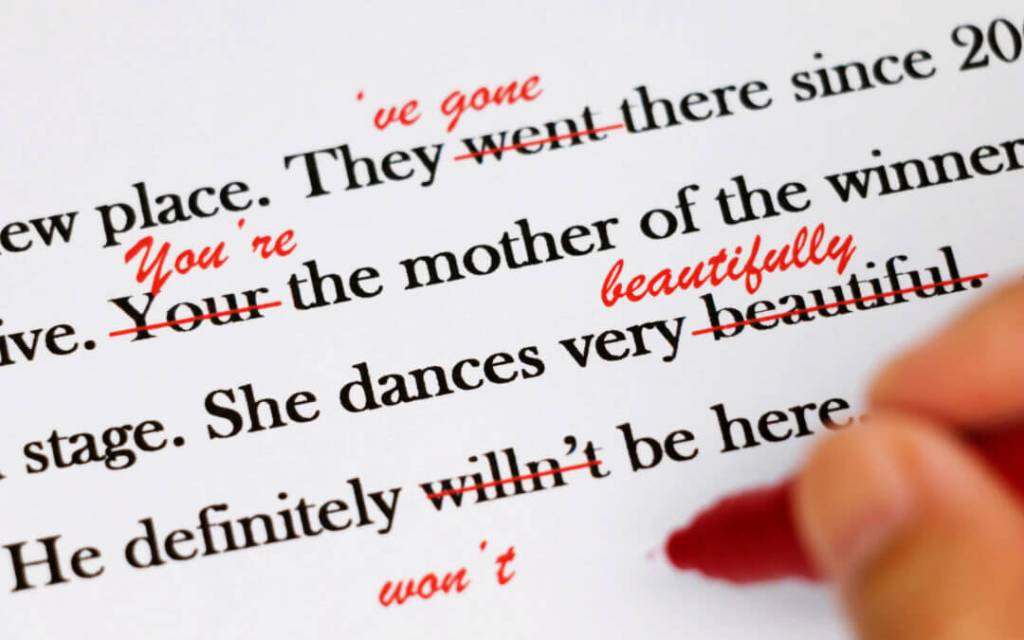
The Art of Revision: Seeing your writing (and life) through new eyes.

Revising your writing involves seeing it through fresh eyes.

“My pencils outlast their erasers.” ~ Vladimir Nabokov

I’m always reminding my students that “good writing is re-writing”. 

I push them to read their work out loud. To look for redundancies. Delete unnecessary phrases.  Re-order sentences.

This is only a start, of course. Revising is not the same as editing. A perfectly grammatical essay can still be trite, boring, or nonsensical.

First comes the vision, then many revisions. 

What is the essence of your story?

What are you trying to say?

What do you want the reader to think/feel?

Revision is an art that’s both gratifying and frustrating.

Revising a story involves assembling many, many moving pieces into a cohesive whole. 

The mission is daunting and best not attempted as a solo task. There are many revision resources to help you.

Deep revision, however, means seeing your story through fresh eyes. This is not easy to do when you’ve been working on the same novel for three years.

That’s where critique partners, beta readers, mentors, and editors come in. These team players will gently point out flaws in your game. They’ll notice inconsistencies, pose thoughtful questions, and suggest revisions to help you reach your peak performance.

Sometimes these revisions are painful to employ.

Like cutting out large sections, or crafting a new beginning.

Or saying goodbye to a character.

Or changing the ending you thought was pretty darn clever.

In order to revise you must take in the big picture…

and then re-vision the story.  

When your clouded eyes begin to see anew, change is possible.

The art of writing revision can be applied to our lives.

We can look back at certain chapters of our life and realize we had misread them all along. Light shines on the pages. Contrasting colors come into view. Characters take on new dimensions. Truths are revealed. This re-vision shapes tomorrow’s unwritten chapters.

Revision allows for transformation.

We all have stories we tell about ourselves. We cling to these narratives, even when they no longer serve us.

Sometimes we need an editor to help us see where to make deletions, insertions, and add fresh imagery to our story.

And sometimes, the best—and hardest—thing to do is to let go of that story and begin a new one. ~

Lessons from my Olympic Dad-Byron Krieger

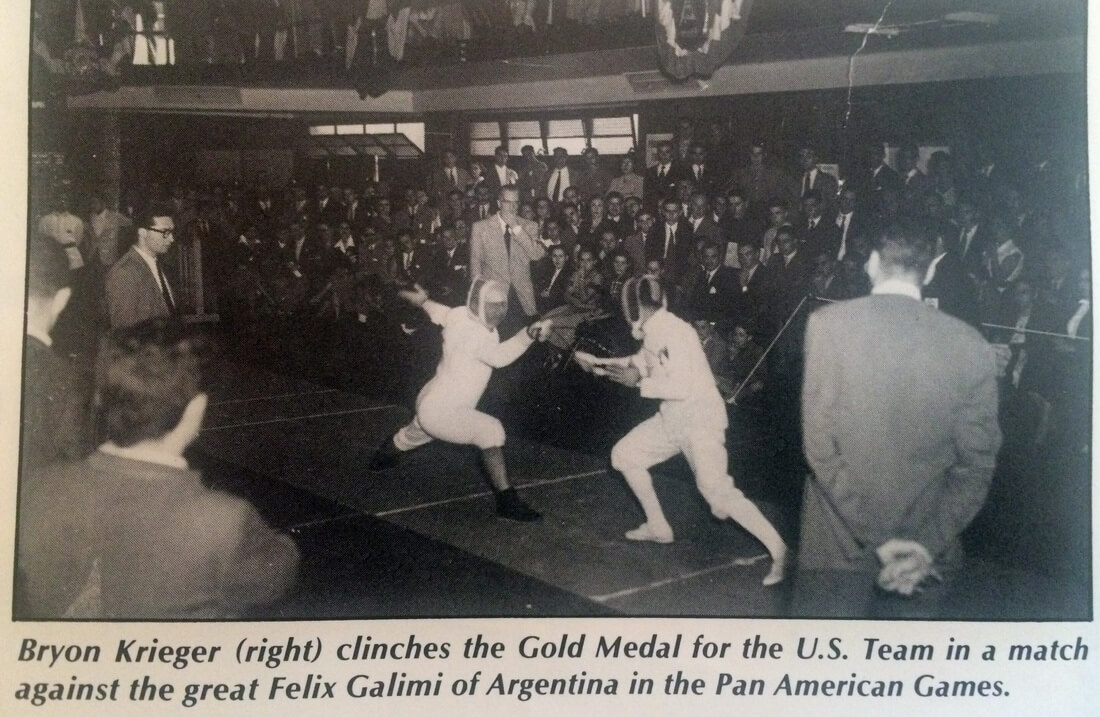
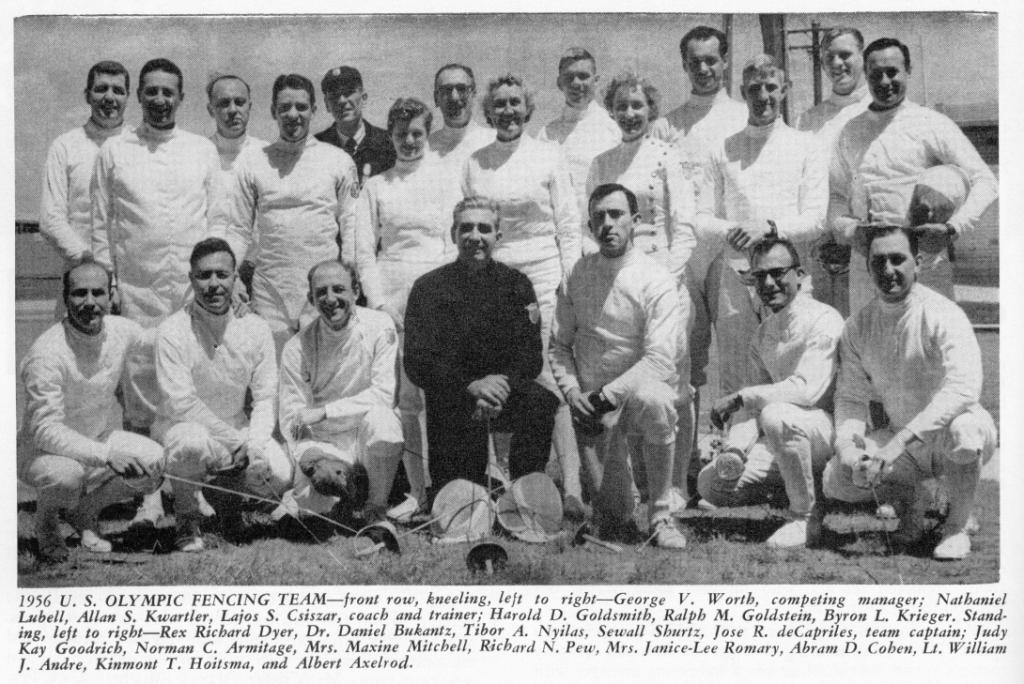
My Dad, Byron Krieger, was a two-time Olympic fencer.

He also competed in the Pan American games, the Maccabi games, and many regional/national tournaments. He’s in 3 Hall of Fames.

Dad never boasted about any of this. Growing up, my siblings and I enjoyed hearing stories of his fencing days. He was clearly proud, yet his accolades were most often relayed to us by our uncles and mother. Years later, we’d learn even more about his accomplishments through reading newspaper clippings. 

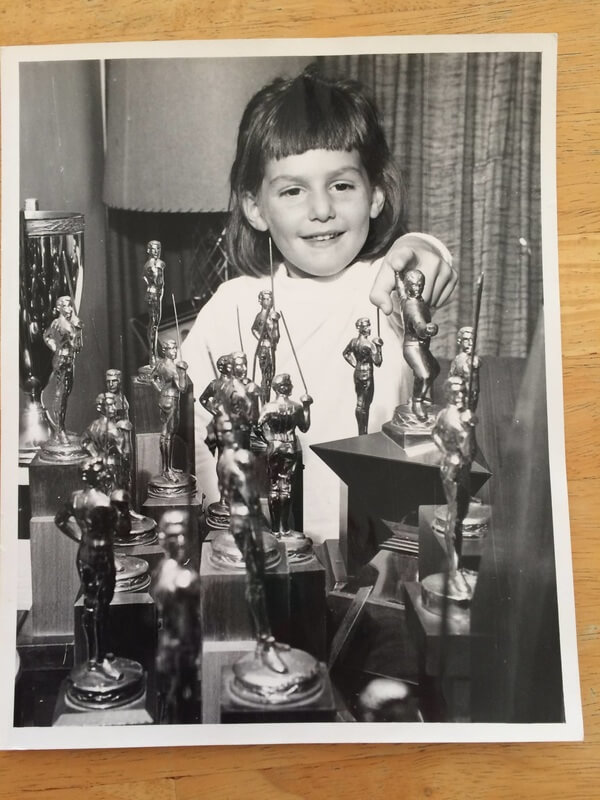
Dad’s trophies and medals lined our living room. I liked to read the plaques and run my hands over the golden fencer figure on top.

Our friends were impressed, though we usually had to explain the sport of fencing had nothing to do with backyard boundaries. Once the kids heard about swords, their eyes would pop. “Did he ever kill anyone?”


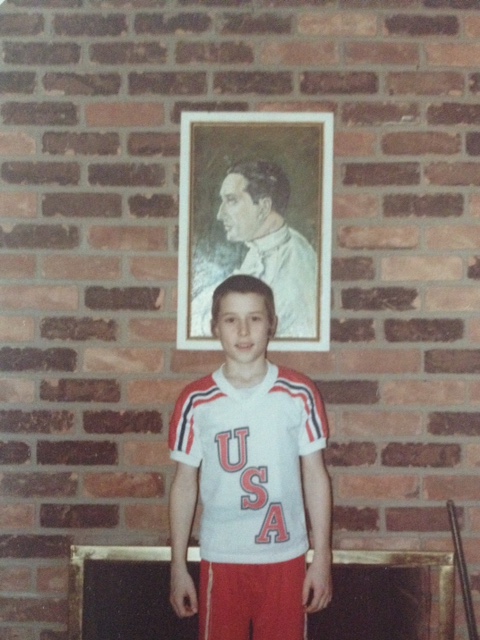
A portrait of my father wearing his Olympic uniform hung in our family room. I’m sure my mom put it up.

Throughout our childhood, our father’s quiet but powerful presence emanated from this painting.

It’s funny how family pictures can become part of the background noise that you don’t even notice, until one day, after not having seen it for many years, everything comes back. 

Now, I can feel the weight of expectation, mostly unspoken, yet fully absorbed:

Work hard. Strive for excellence. Never give up. Face your fears.

Once, as a teen, one of my brothers asked Dad if he could wear his Olympic warmup jacket that hung in our front closet. His answer, delivered with a smile, surprised us. “No, because you didn’t earn it.”

Today, our father’s jacket is displayed in the Museum of Fencing

There were other ingrained lessons, too, mainly taught by example, lessons I still try to live by.

*Be the better person

*Avoid gossip

*Be kind.

*Don’t hold grudges.

*Treat all people with respect.

*Practice good sportsmanship especially when you lose.

*Deflect uncomfortable conversations with humor. 

*Admit and learn from mistakes.

*Don’t complain

*Be proud of your heritage


To honor his legacy, I created the Byron Krieger athletic scholarship for talented students who embody Dad’s values. 

Gabriella Hirsch

One of the special outcomes of this endeavor was hearing from children and grandchildren of Dad’s Olympic teammates.

The inscription on my father’s gravestone reads: Humble Champion.

The short phrase sums up a long and abundant life. ~

One Day At A Time? Imagining post Covid life.

During the height of the Covid-19 pandemic, imagining the future seemed downright scary, if not impossible.

The undeniable uncertainty of the virus, along with the chaotic state of our society, seemed to demand we move toward the One Day At At Time, philosophy.

Planners and long-range thinkers surrendered. Those who had always tended to lived within the NOW, were more prepared to ride the anxious wave of uncertainty. 

Imagining a future safe hug from a distant loved one,

or a trip abroad,

or the sweet kiss of a grandchild,

was about as much forward thinking as many of us could handle.

Enough hope to light our way.

But thanks to a medical miracle, the world began opening up, albeit amidst continued divide and tragedy. 

A new kind of normal in which to navigate.

Some of us began to hope. To plan. To move forward.  To imagine a post COVID future.

Are you making travel plans? Saving for retirement? Revisiting your New Year’s goals? Starting a creative project? Moving?  Switching careers? Filing for divorce?

As we sort through the wreckage, many of us are re-evaluating our pre-pandemic life. Now seems like a ripe time for life renovation, no matter the losses. Even small repairs can reap enormous benefits. 

The uncertainty has always been there, just easier for us to deny. Worrying about the future isn’t helpful but planning, even if it’s just day-by-day, can get you there eventually.

This is how I feel about my novel-in-progress. I’m getting closer each day. But if I think too far ahead, I begin to imagine all the potential obstacles, the chance for failure.

I choke.

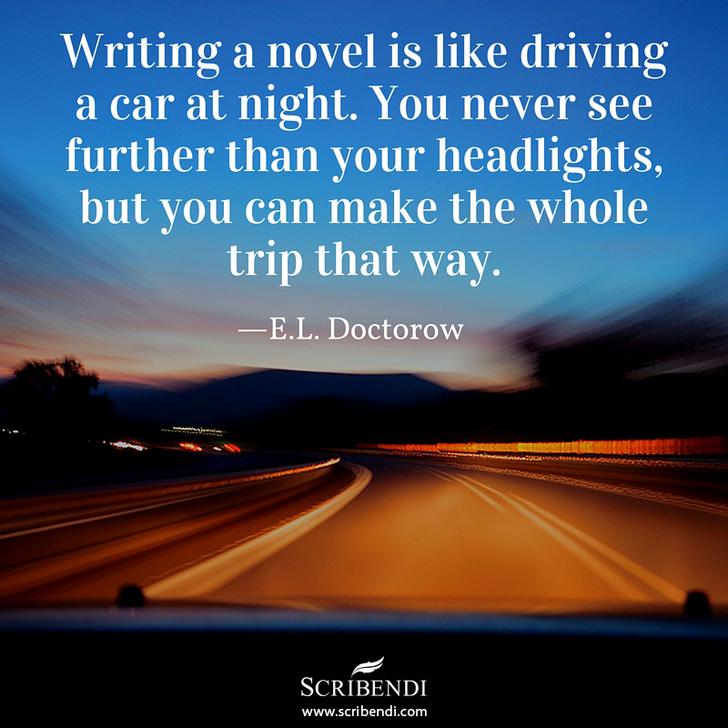
To temper the overwhelm that comes from looking too far forward, I recall E. L. Doctorow’s quote:

Pretty good life advice for us all at the present moment.

Do You Get Me? Writing from another person’s perspective.

“The characters were so believable!”

This is a compliment any fiction writer would love to hear.

To craft memorable stories, the writer needs to enter the mind and heart of her characters and then bring them to life on the page.

How do you do this?

You can find excellent guide books on this fascinating topic. For starters, I’l offer key traits a writer should cultivate when trying to get into someone else’s head.

Curiosity

Intuition

Imagination

Open-mindedness

Listening skills

Empathy

Sensitivity

Notice how this list applies to our real life relationships? 

Imagine how such skills and practice could shape our present day divisions.

While one can never truly know another, the quest to do so—and to be seen ourselves—drives us.

Sometimes to love and madness. 

Try putting yourself in my shoes, for a change.

You just don’t understand.

Are you crazy?

She can read my mind.

He really gets me.

It’s easier to write characters with a similar perspective, background, and age as yourself. But to stick with that limits the scope of your creative work. Plus, it’s boring!

Writers who wrote outside their own boundaries brought us great literature from Henry James to Agatha Christie. Men transporting themselves into a woman’s head and vice versa.

Nabokov wrote Lolita in the voice and mind of a murderous pedophile.

The best-selling novel, Curious Incident of the Dog in the Night-time, (Mark Haddon) is narrated by an autistic teen.

Let’s consider age.

I am all the ages I have ever been. ~ Anne Lamott

In Room, Emma Donoghue narrates the book through the eyes of a 5 year old boy being held captive in a small room along with his mother.

J.D. Salinger’s inner 17-year-old, Holden Caulfield, catapulted Catcher in the Rye to classic fame. 

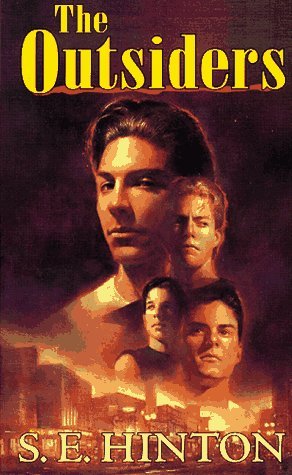
My middle-school students were always shocked to learn that cult fav, The Outsiders, narrated by a 16 year old boy, was penned by a teen-aged girl.

Beloved children’s author, Judy Blume, now age 83, attributed the success of her children’s books to her ability to access her inner child. “I’m still like an 11 or 12 year old inside,” she told an interviewer.

How about writing in an age you have yet to be ?

Marilynne Robinson’s, Pulitzer-Prize winning Gilead is a diary from a 76 year old preacher to his young son.

I’ve written stories from the perspective of a confused middle-aged man, a 25 year old exotic dancer, and a 9 year old fire starter. My current project features an almost 12 year old roller coaster enthusiast. To capture her essence, I read childhood diaries, studied old photos, and visualized my 6th grade self.

But it’s the spirit of a 15 year old girl that comes most naturally. Perhaps because 15 was a pivotal year in my life. I also work with teenagers, so I get to know them up close. 

My recently published short story, “My Father’s Messiah”, is about a 15 year old orthodox Jewish girl who worries her widowed father may be losing his mind.

I am honored to be awarded the First Prize in the Katherine Paterson Award for Young Adult Literature. Thank you to Hunger Mountain Journal and Vermont College of the Fine Arts.

It begins like this:


Every school morning, my father wakes me the same way: he yanks open my blinds, slaps his hands together, and says, “Boker tov, beautiful daughter. Time to rise and serve your Creator.” 

Once upon a time, I didn’t need wake-up calls. I bounced out of bed as if each day delivered a surprise package. When I was five, I might have found my father’s routine cute, but now my fifteen-year-old brain barely registers Abba’s words. Instead, I hold onto my last dream before it morphs to reality.  

“And who knows?” my father booms. “Today might be the day the Messiah comes!”

He says this says every morning. No joke. 


You can read the story here

What is your inner age?