Blog

Strange Encounters On A Sidewalk.

In the department of random encounters, I experienced another one on a recent trip to Chicago. I’m still thinking about it. 

I take a cab from the airport to my hotel. The driver misses the hotel entrance by half a block. “This is fine,” I say.

I step out into the sunshine. Just as I begin pulling my luggage across the quiet, treelined street, I see–or think I see–a startling sight.

A elderly man, well-dressed. On his hands and knees. On the sidewalk.

I run over to him. “Are you okay?”

“No”, he says, his voice shaking. “I fell.” Blood drips from his face onto the cement.

I drop my bags, crouch beside him. “Should I call an ambulance?”

His arms are shaking. “Just need help getting up. I’ve been trying…”

I ask his name. “Okay, Harold. I’ll try lifting you.”

I stand behind him, bend down, and wrap my arms around his chest. “One, two…” After some struggle, I manage to get him standing.

Harold grabs onto my arm, steadying himself. “What are you, my guardian angel?”

I smile at this term I often use, then introduce myself. “Are you sure I can’t call for help?  Maybe your doctor?”

He says he happens to have an appointment tomorrow. “Lucky thing, huh?” Harold puts a finger to his dripping nose. “How bad is it?”

 I look closely at his wounds, trying to figure if they need stitching. I reach in my bag for a tissue, carefully dab at the cuts. He winces. “Your forehead has a gash. Looks like you smashed your nose.”

“Well there goes my movie contract.”

His joke calms my nerves. I try to clean up the dripping blood.

I retrieve his cane. “Where do you live? Can I call you a cab home?

He names a nearby suburb, 15 minutes away. His car is parked down the block and around the corner. Can I walk with him? he asks

Trepidation. Not sure I can manage that. What if he falls again? “Harold, do you think you can drive?”

“I’ll see how it goes once I get to my car.”

Then, as if on cue, a strong-looking man exits a nearby building. His eyes widen when he sees the two of us. “Need some help?”

Relief.

Harold says, “This nice woman came to my rescue.”

I explain the situation and my uncertainty about Harold’s condition. The man nods as if to say, Don’t worry, I got this.

Harold thanks me, shakes my hand. I wish him good luck.

* * *

Not until I am in my hotel room, do I notice the blood on my arms.

I scrub at the sink. Surprise tears come. Don’t know why. My brain is still processing what just happened, how I, once again, found myself in the “right place at the right time” to aid a stranger

I take deep breaths.

A buried memory surfaces. My elderly father walking alone to synagogue on a Saturday morning. He trips and falls face first on the sidewalk.


A stranger comes over to help, waits with him for the EMT to arrive.

When I later hear about this, I picture my father in his suit lying on the sidewalk. I imagine his indignity, the pain, his bruised face. But Dad’s sense of humor puts me at ease. “I’ll just tell everyone I got into a brawl,” he says over the phone. “Good conversation starter at my age.”

* * *

I recently had the pleasure of watching my granddaughter take her first steps. Then fall down. Her father gave her a hand, and she tried again, happily toddling across the floor.

Photo: Jordan Christian

In the midst of this joyful moment, the image of Harold on his hands and knees flashes in my mind. I remember every detail: his thin voice, the feel of his grey sweater vest, blood on his white shirt collar, his dress shoes straining against the sidewalk. His watery blue eyes.

My thumping heart.

I consider the strange timing of the incident, and that, oddly, no one had passed by to help him before I arrived on the scene.

Fall. Just think about how often we use that verb.

Fall from grace. Fall under the influence. Fall off the wagon. Fall into despair. Fall on hard times. Fall for the joke. Fall into a trance. Fall asleep. Fall behind. Fall apart.

Fall head over heels in love.

This can also wound.

Whether metaphorically or physically, we all fall at some point. Let’s hope someone will be around to lend a hand. 
Let me fall if I must. The one I will become will catch me. ~The Baal Shem Tov

Staying Strong In Times of Transition

When working with my private writing students, I show them how to use transitions to establish logical connections in their essays.

Transitions are words, phrases, and sentences that signal relationships between ideas. Once you get the hang of using them, they make your writing flow.

Grammarly

If only the transitions in our lives were as simple and clearly defined.

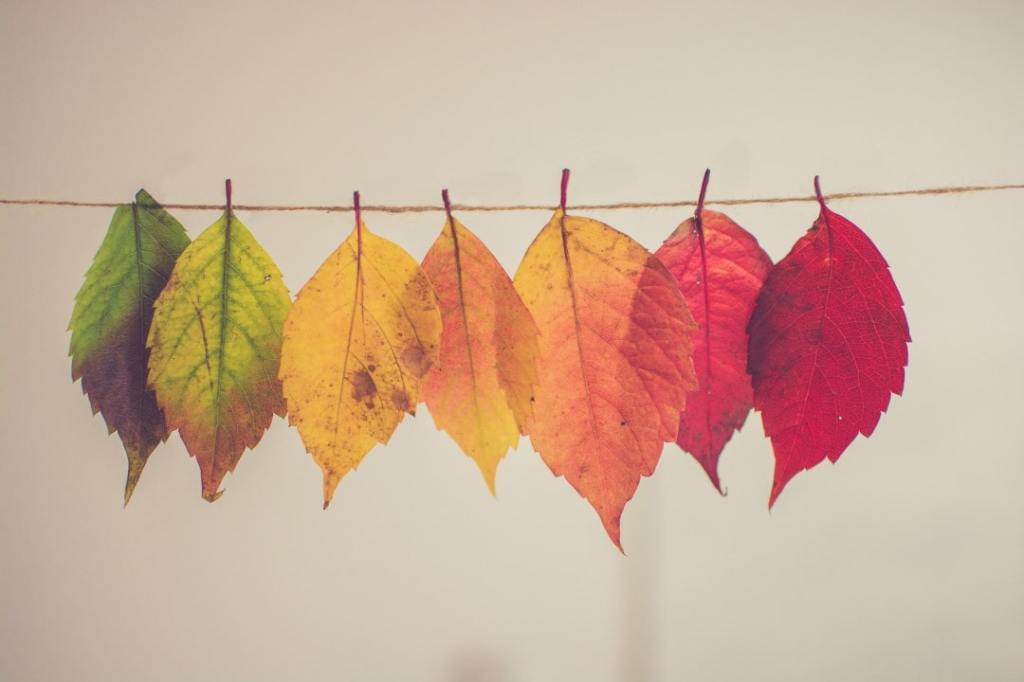
I’m writing this post on September 22, the beginning of the autumnal equinox in the Northern Hemisphere.

The Sun will shine directly on the equator and there will be nearly equal amounts of day and night throughout the world.

According to the astronomical calendar, my favorite season–summer–has officially ended.

Another transition.

As glorious as the early fall days are in New England, the shortening of the daylight begins to weigh on me. Increased work demands detract from my creative endeavors.

Bittersweet fall anniversaries arrive.

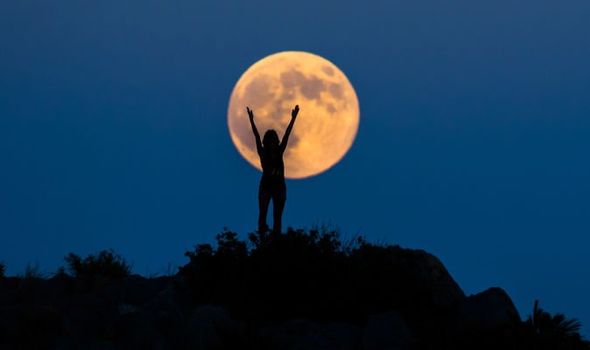
The Jewish New Year, Rosh Hashanah, is a transition to a time of reflection and renewal. The holiday begins on the eve of September 25 and coincides with the New Moon.

During this lunar phase, the Moon is located on same side of the Earth as the Sun. The moon won’t be visible in the night sky.

The missing moonlight, however, makes for a better time to observe galaxies and star clusters. Bonus!

This idea got me thinking….

When someone is missing in our lives, we live under a dark shadow. It’s hard to see past the loss.

Yet, perhaps, like during the New Moon, this period of darkness offers us an opportunity to see more clearly.

For only when the moonlight “hides” can the faint objects come into full view.

Like following the stars of a constellation, you begin to “connect the dots”.

Maybe you’ll have a eureka moment, like a meteoric flash, that transforms the horizon.

If it is still possible for your loved one to return, then you may reconnect with greater understanding. You can share the insights observed in your night sky.

And if there is no chance for return, then hopefully the clarity and awareness gained from their absence can help you transition to a new phase.

What does the transition to autumn mean to you?

Adventures in Sailing: A Metaphor for Life

You need wind in your sail and the boat will move forward.

When was the last time you took up an unfamiliar sport or hobby?

As adults, we tend to stick with what we are good at.

It’s fun to learn something new as long as we don’t have to make a fool of ourselves.

Or risk failure.

I can’t draw a straight line. I have two left feet. I flunked gym. I’m bad with technology. I’m afraid of heights. I can’t carry a tune. I’m not creative.

My quest to say “Yes” in 2022 includes trying things outside my comfort level and experience.

I’ve had years of ballet training, so trying new forms of dance, while at first challenging, is still fun and familiar. Chance of failure pretty low. Fear factor-zero.

I knew I needed to stretch myself if I was to conquer fears.

It was time to raise the bar.

This summer I signed up for sailing lessons.

Before you say, Oh, how fun!, please know it was not on my top list of activities. In fact, applying to be a civilian passenger on a spacecraft ranked higher. (I did apply but that is another story.)

Prior to signing up, the only sailboat I’d been on was a 70 ft. catamaran in Key West. Now that was fun.

I got to relax, enjoy a margarita and good company, while a master skipper took to the giant sails. With a calm sea, perfect weather, and a spectacular sunset…What’s not to like?

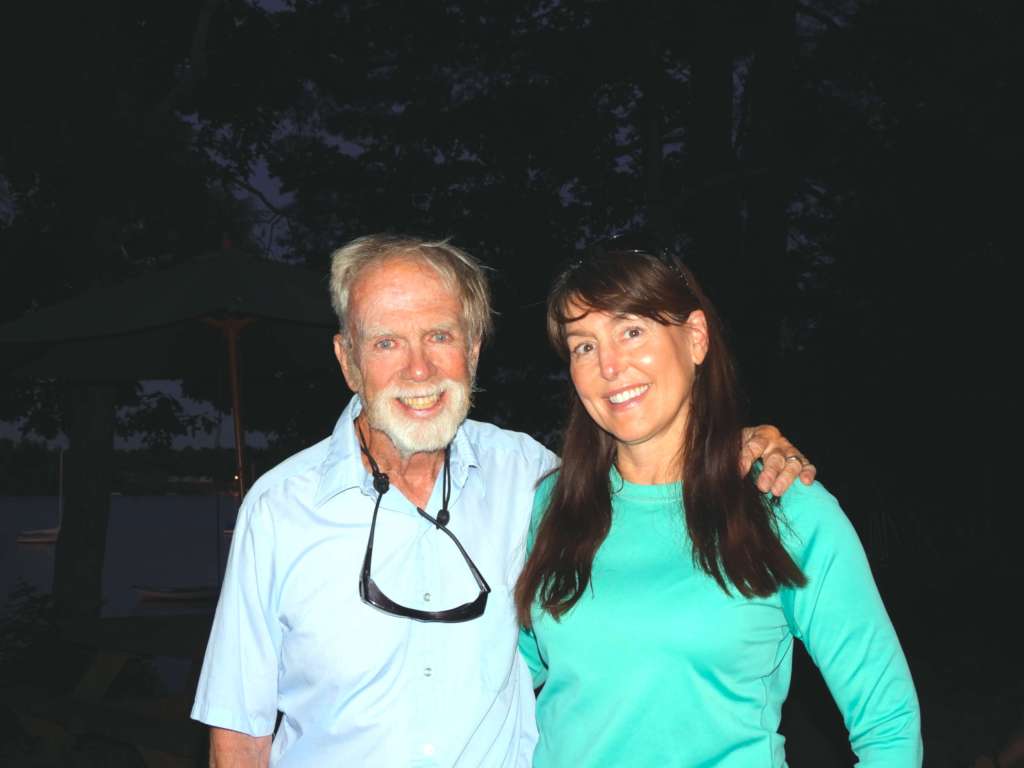
My summer sailing lessons were offered through a yacht club on our town lake. The legendary sailing coach, Bob G. has been sailing, racing, and teaching for 50 years!

At age 80, Bob still possesses incredible strength and stamina.  I watched in awe as he jumped in and out of the boats, helping the students rig their sails. 

These sail boats are not huge. You sit low and close to the water. There’s no motor. You can’t quickly change direction or speed. There’s a feeling of vulnerability, at least for me, being out in one.

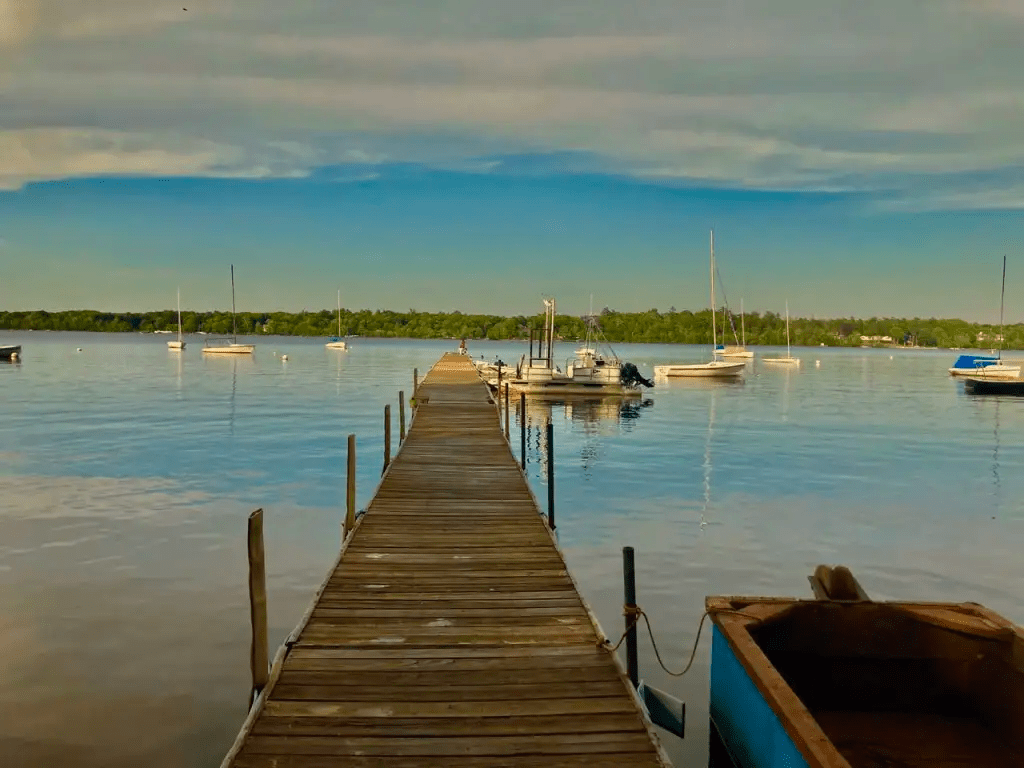
View from the Dock

And I had no idea there was so much involved in the sport. 

Putting on the rudder. Bailing the water. Lowering the boom. Rigging the main sail and the gib sail. Securing the ropes.

And that’s all before you leave the dock!

Upon returning to the dock or mooring, you have to do everything again in reverse.

Then there is the sailing vocabulary to learn: tacking, gibing, luffing, beam reach, in irons, centerline, starboard, port, leeward, fairlead, and clew.

My sense of direction has never been great, so learning the essential Points of Sail proved challenging, as well.

My Homework

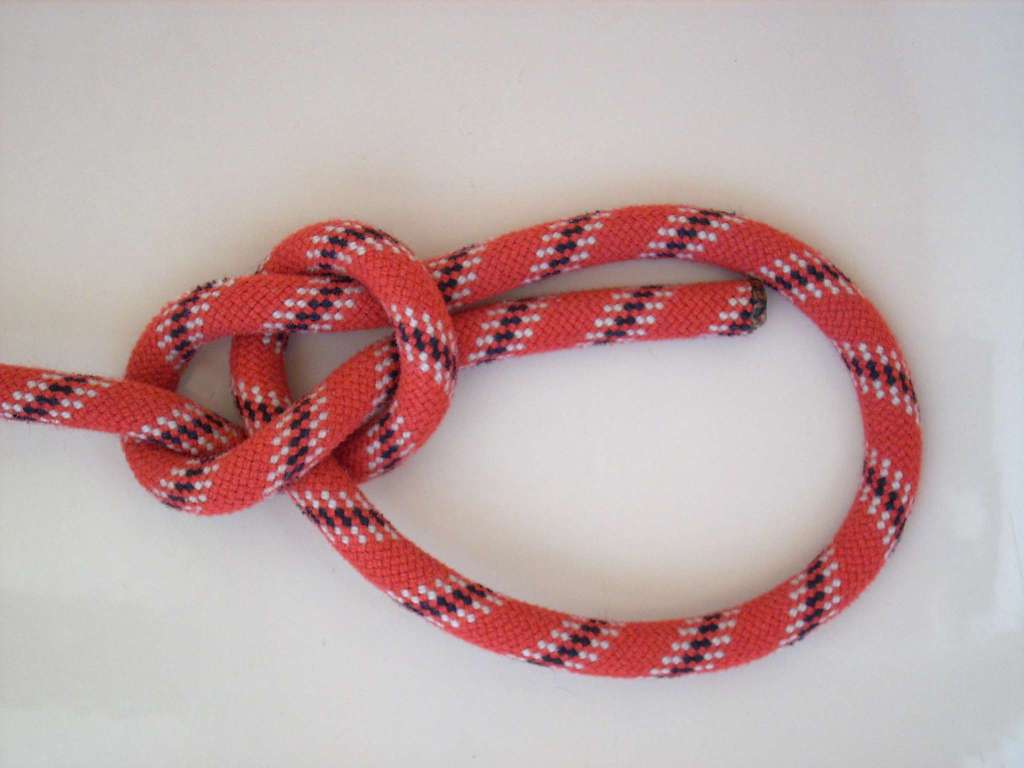
I can still do a double pirouette but cannot tie a proper knot for the life of me. Can you, dear reader, tie a quick Bowline knot?  

Wikipedia

At home I practiced tying with the help of YouTube tutorials. By the next sailing class, though, I’d forgotten the procedure.

This sense of defeat made me sympathetic to what my adult ballet students must have felt when I demonstrated the sequence of a seemingly simple dance combination. Why couldn’t they get it? I’d thought at the time.

It didn’t take Captain Bob long to pick up on my anxiety.

Instead of letting me sail with my requested partner our first time out, Bob assigned me to his boat, along with Mary, another sailing novice.

Bob was patient but firm, giving clear directions and expecting us to follow suit.

Never mind the information overload. At least I felt safe in Bob’s boat. He could read the wind and water like I analyze a poem.

Next lesson, though, we were on our own. Bob would monitor us, and the other class members, from his motor boat.

Yikes.

There were moments of panic in the middle of the lake when I was doing everything wrong, my partner’s commands coming too fast for me to process.

At times, I feared the boat would capsize. (Did I mention I don’t like swimming in lakes?)

Upon seeing the distress signal, Bob did not heed my request to return to the dock.

Instead, he sent his teenage assistant over in a rowboat.

The agile boy climbed in our sailboat. “What’s troubling you?” he said, sounding more like a therapist-in-training.

The boy assured me that we wouldn’t capsize. Or crash into the oncoming boats.

Though he admitted it could feel that way.

“Just do this to balance the boat,” he demonstrated, sitting atop the side and leaning far backwards. 

Ah, sure. Thanks.

Next class, just before sunset, the lake remained still. I began to relax and enjoy the scenery from a new vantage point.

I felt as if I’d stepped into a Monet painting.

“San Giorgio Maggiore at Dusk “ Claude-Monet.com

Bob rowed over to my boat, his arm sweeping across the gorgeous sky.“See? This is what it’s all about!”

After each sail practice, Bob did a debriefing back on land, offering tips on wind currents, sailing maneuvers, and safety measures.

Once, after spending a half hour just rigging the boat, pushing away from the dock and setting sail, he called us back in because of a lightning threat. 

After we gathered on shore, Bob reminded us of the old adage:

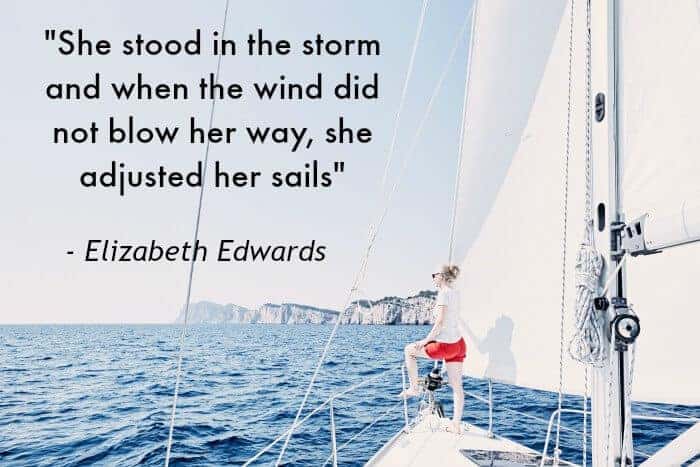
You can’t control the weather, only the direction of your sails.

Yes!

That metaphor fit my life perfectly. What a great lesson for us all.

Karla’s Korner

* * *

On the last day of class, Bob pronounced us graduated. “Summa cum laude!” 

I think he was being generous with me. I’m no way ready to skipper a sailboat. For now, I’ve advanced from passive passenger to cautious crew.

Captain Bob

Learning a new skill is good for our brain. Doing something we fear is good for our spirit.  

This summer, I accomplished both.

I’m still working on that Bowline knot.

Call me Evelyn.

Christine Lindstrom

Dear Reader, Thanks For Writing!

Writers appreciate hearing from their readers.

M. Weidenhoff

Writing can be a lonely business. You spend hours in your head, talking to yourself, hanging out with imaginary people.

You sit at a desk trying to spin chaos into order.

Some days, the jumble of words magically align, like a string of pearls to polish and present.  

But where these words land, who sees them, and how they are received is not always apparent.

That’s why it is so gratifying to hear from a reader–whether in-person, through email, or online comment. (I occasionally get a phone call but only from those I know personally.)

Many of you prefer communicating via the Contact Evelyn page rather than leaving a public comment. Some readers ask for writing advice.

Through my website, I’ve heard from men I once dated and friends from years back. Occasionally, I get a creepy letter or comment. That’s when the BLOCK option comes in handy.

My blog stats range far and near: Israel, India, Denmark, New Zealand, Romania. I hear from kindred spirits across the country. I feel fortunate to have met, in Real Life, two of my blog readers and was enriched by the experience.

My July 2022 post Is It Ever Too Late To Find Love? generated a lot of mail. (Including one marriage proposal!) You had lots to say on this topic and wanted to share your tales of both woe and joy in love.

Loui Juver

Because I write frequently about grief, I receive letters from readers sharing their personal loss. These are the hardest letters to read, but also the ones that most touch my heart.

A distraught woman who had just lost a close family member in a fiery car crash wrote to me a couple months ago. She read an essay I’d recently published in Chicken Soup for the Soul. Her letter was detailed, heartfelt, and, I admit, triggering for me.

Still, I took the time to answer the best I could, knowing that she was in the hardest part of her grief journey.

A.M Zilberman

Ten years ago, I published an essay in Tablet Magazine about feeling ambivalent toward my 20 year old daughter’s impending marriage. This story continues to circulate, probably around wedding season, and I receive emails from mothers and fathers in a similar predicament. Fortunately, I have gained wisdom since then to share, along with a happy ending.

I receive fewer letters about my short fiction, though some readers have questioned whether I was writing about them. Answer: No.

One of the most memorable letters came from a Montana reader of my YA novel, One Is Not A Lonely Number.

“I’m the only Jewish girl in my school. Reading your book made me feel less alone. Getting to know Talia and her friends meant so much to me. I loved the way you showed how they were religious but also regular girls who get into fights and mess up like everyone else...”

Whether a debut or seasoned author, such personal letters often mean more to the writer than a book review or promotional tweet (which, of course, are also appreciated!)

I like to pay the kudos forward.

After reading a book or story that impacted me, I will take a moment to find the author’s contact info and let him/her know. This practice has led to enjoyable correspondence for me as well.

We creative souls write for many reasons: to make sense of the world, understand ourselves, explore obsessions, persuade, provoke, illuminate, entertain, and inspire.

Many of us write to connect with others.

So, thank you dear reader for writing!

What Are The Odds? Learning From Coincidences.

One of the cardinal rules of fiction writing is: do not use coincidence to solve a a character’s problem.

When coincidence is used in this way, readers feel manipulated–(which writers do all the time. The point is for the reader not to notice.)

Used cleverly, however, coincidence in fiction can set off a chain of events and deepen the meaning of the story. 

But what about in real life? Do coincidences have meaning?

The answer depends somewhat on your life outlook. Do you see the universe as a series of random events with no inherent connection? Do you seek scientific explanations for improbable events?

Or, do you believe some things are fated ?  Maybe you subscribe to the notion that “everything happens for a reason”? Perhaps you see Divine intervention in some coincidences.

You run into your former lover in a city you both have never been ten years after your parting with no contact in between. Each of you say you were thinking of the other in the past month.

Psychologist Carl Jung called these kind of events “synchronicities”, surprising juxtapositions that scientific rationale can’t explain. The word synchronicity means “together in time” and suggests an underlying order to our reality. A connection between everyone and every living thing. 

Jung saw synchronicities as a tool toward personal growth and meaning-making.

Just as we can derive meaning from reading a novel we know isn’t real, I think life’s coincidences can offer meaning, as well. Synchronicities evoke wonder and amazement. They remind us of life’s mystery.

The stranger or more improbable the coincidence, the greater our astonishment. 

A common category of coincidences is finding an uncanny connection with a person you meet.

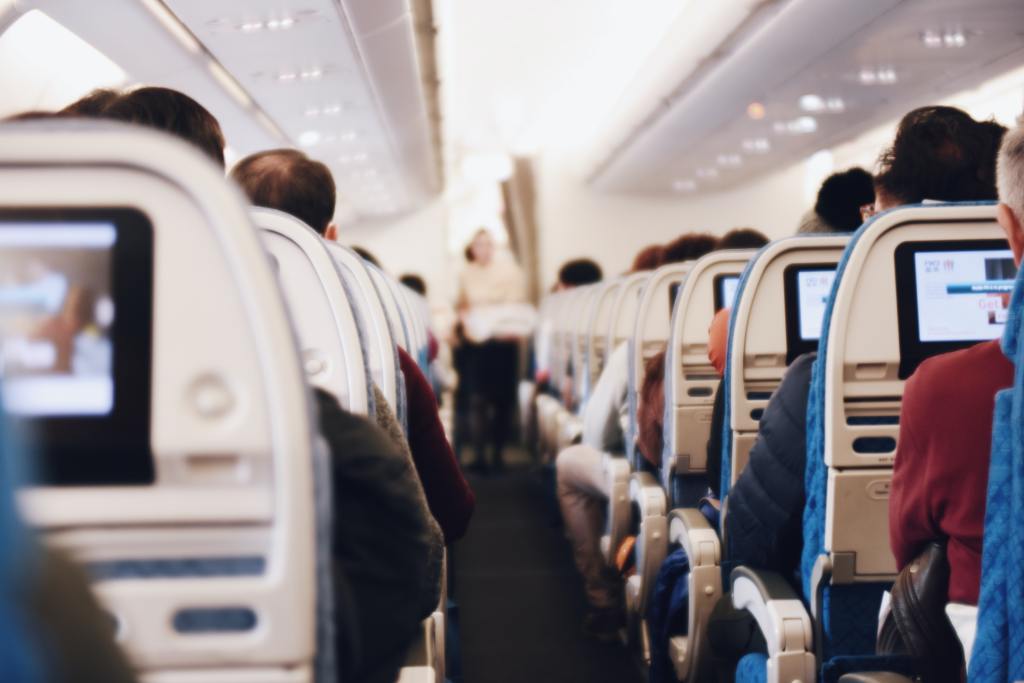
On a recent flight from Boston to Chicago, the woman sitting beside me, to whom I hadn’t said a word the whole flight, asked me if the American Airlines terminal was very busy. 

“Oh, you’re not from Chicago?” I asked.

“No, just getting a connecting flight.”

I offered a few tips for navigating the O’Hare terminal. “Where are you headed?” I asked.

“Michigan.”

I smiled. “That’s where I grew up.”

What ensued was an enjoyable conversation with my seat mate.

We discovered that she and I had grown up in the same city just a mile apart. We’d both taken ice skating lessons at the same arena. We were both from large families and now had daughters the same age. We both had family still living in the area.

This in itself isn’t so incredible. What struck me is that the only reason we’d met is because I had taken the wrong seat. 

The woman who was assigned 22F told me not to bother moving. She was fine with taking 22A across the aisle.

While I’m usually friendly and enjoy meeting new people, when on “airplane mode” I’m either white-knuckling through turbulence with music piping in my ears, or busy working on my laptop.

Add a mask to the above mix and you might call me an anti-social flyer.

Once inside the airport, Lauren and I each unmasked to reveal our smiles. Then we exchanged contact info.

And the lesson from this coincidence?

Talk to people! Some strangers turn out to be friends you’ve not yet met.