Blog

Does Time Heal All Wounds?

Does time heal grief?

tile_flies_photo

“Time flies over us but leaves its shadow behind.”  ~  Nathaniel Hawthorne

If you have suffered great pain and loss, there is a good chance a well-meaning person offered this familiar consolation: “Time heals all wounds.”   

Why do we insist on repeating this phrase? Because we don’t know what else to say. Because there isn’t really anything to say. We want to make the person feel better—somehow. We, standing on the far shore of grief, are certain this saying is true.

Even with some inherent truth in this adage, I believe it is unhelpful to those in the midst of fresh grief. Such a person care barely move through the minutes of each day. 

When my father died suddenly and tragically, I could only see Before and Now.  I did not care about how I would feel six months into the future because I couldn’t imagine that future.  As an ambitious person who can get consumed with productivity and efficiency, I had to surrender to grief. I had to learn that recovery cannot be rushed along.

Even today, exactly one year later, I do not feel the passage of 12 months. The chronological movement of time did not heal. It is what happened to me during that time. I got therapy. I had supportive friends. I practiced self-care. I mourned, grieved, reminisced, and reflected.  All this contributed toward healing. The wound is still there, perhaps covered by a scar, but the unbearable pain has lessened.

Each grief is unique to the person who is grieving.

Circumstances of the loss matter, too. The loss of a child, for example, may never be “gotten over”. The worst thing you can say to a grieving person is, “Gee, it’s been X months. You have to get on with your life.”  Wouldn’t the grieving person “get on with her life” if she knew how?

Instead, it is far better to say: “I know you are suffering terribly and can’t see any way out. But I know you will get through this if you give yourself time to heal.”

Then offer your steady presence. Listen more. Say less.

Young woman, arm around another, comforting her

Time itself does not heal wounds. If anything, time may soften the sharp edges of pain. The grief process, unlike time itself, is not linear. Grief has the power to make you feel stuck in time. It has the power to narrow your vision so you can’t see a future.

Time can heal if you use it well. You have to take time to do the necessary inner work. The only way to get over grief is to go through it. There is no detour.

Losing My Words: Grief Amidst Graduation

I lost my father in a horrific accident.

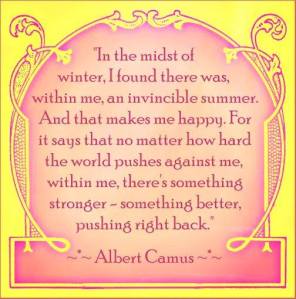
Albert Camus Quote

This past November, I lost my father in a horrific accident.

The days and weeks following were filled with disbelief, turmoil, and trauma.  I couldn’t eat, couldn’t think, couldn’t write. The crushing grief took away my words—and that was devastating. Writing is how I make sense of the world.  I imagined that writing would be part of my healing, but I could not find any words to tame my anger and sadness.

I wasn’t even sure what day it was. 

The recovering perfectionist, take-charge, get-it-done, type of person found herself in a state of confusion and paralysis. I had no choice but to surrender to grief and give myself a big timeout. This meant putting aside writing projects and taking a break from consulting work.

But there was one job I couldn’t take a break from—homeschooling coach to my youngest daughter.

Audrey was in the midst of her college application essays and creating her art portfolio.  She had 10 colleges on her list.

As her homeschool supervisor/guidance counselor, I was responsible for all documentation, the transcript, curriculum description, as well as reviewing her essays. Now, my brain was muddled, my attention and energy compromised. I felt panicked by my inability to fully resume this responsibility.

My daughter knew how much I was suffering. Yet in the midst of our family crisis, she became a pillar of strength.  The years of homeschooling had prepared her for independence.

Audrey continued her studies and kept all commitments. She reached out to a mentor for help with writing the essays. She enlisted a team to assist her in finishing her portfolio film—all while I was curled up on the living room couch.

Gradually my brain fog lifted.  I was able to check over Audrey’s final applications and help her prepare scholarship essays. Miraculously, I watched the tasks on her College Countdown list disappeared one by one.

Jan 15th arrived and the final application was submitted. We were done. 

Winter. Spring. Summer.  

Now I have a homeschool graduate, on her way to college, who knows how to advocate for herself and problem solve. She faces obstacles and challenges with grit and grace. These essential qualities aren’t reflected in grades or test scores, but they will carry her far.

My words are returning.

The healing continues.

img_4671_27183425914_o copy.jpg

The Homestretch: On the Road to Homeschool Graduation

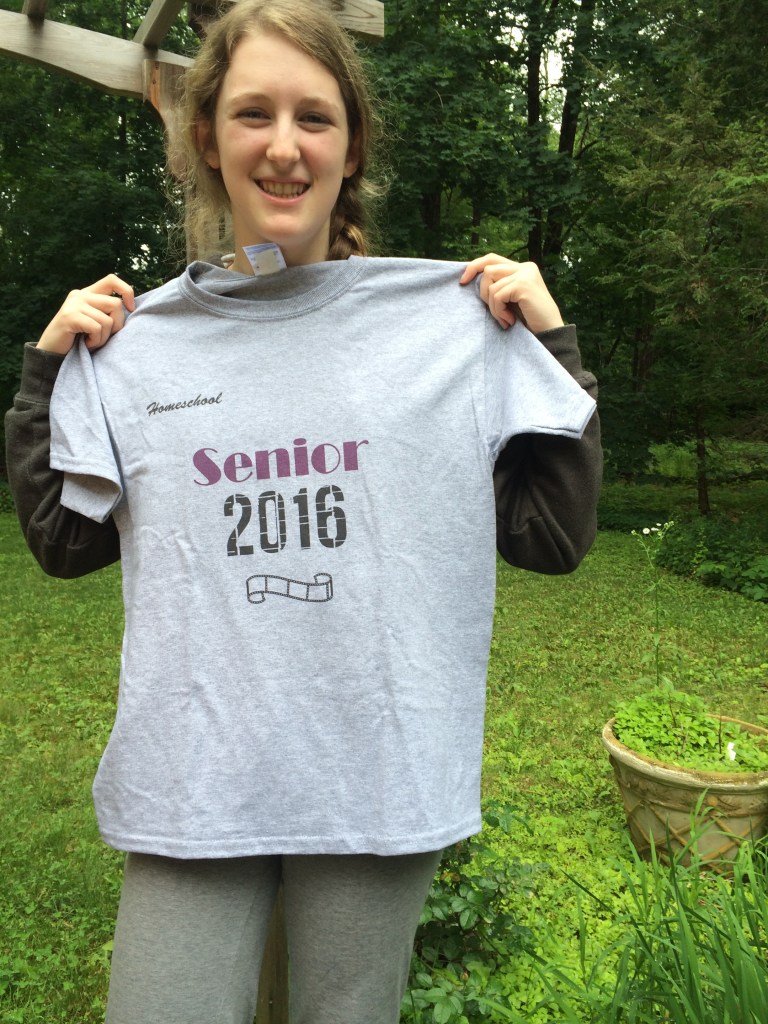
Tomorrow officially begins my daughter’s senior year of homeschooling. When I say “officially”, I  mean that she begins classes and independent studies toward her high school diploma.  In truth, Audrey is always learning.  This summer she played the piano, read, watched classic films, took Spanish lessons, wrote a film script, and created a screenwriting program.

Friends have said to me, “Now you can see the light at the end of the tunnel !”

Yes, we are on the homestretch toward graduation, but as I think more about that expression I realize it doesn’t quite fit.  I wouldn’t describe our homeschooling years as a tunnel.  There was nothing dark or long about it.  It was a multi-year journey that took us to all kinds of interesting places.  Along the way, I sometimes had doubts that we were not on the right (or best) path, that something would be missed.  Gradually, I let go of these uncertainties. My daughter’s happiness and engagement in learning mattered most. 

Audrey and I both miss the early carefree days of this journey when we weren’t thinking about transcripts, standardized tests, and college admissions.  In the elementary years, Audrey had lots of time to play, explore, create, imagine, dance, and think. (Not to mention, sleep.) We took so many wonderful field trips to art and science museums, historical places, nature centers, plays, concerts, and dance performances. Audrey joined other homeschoolers at zoo school, MIT science workshops, wilderness training, drama class, community service and Jewish holiday activities.

She spent a lot of time outdoors.  No homework, no grades in elementary years.

Audrey Plymoth Plantation

And the time flew by!  I really can’t believe we’ve already arrived at this place.

Now she’s finishing up her subject tests, visiting colleges, preparing her portfolio, and writing application essays.  She is passionate about her career plans. She knows what she wants to study in college. Keeping her goal in mind makes SAT prep more palatable.  As busy as she will be this senior year, there will still be time time for adventure and hanging out with friends.   

We kick off the year with a college biology class and then the annual Not-Back-To-School picnic.  

It’s all part of the journey.  I want to enjoy every moment.  

Yes, next June there will be light and joy mixed with sadness. One long journey ending—a new one beginning.

graduation-1426997-639x852

What I learned in 2014

timeforReview

I’ve already admitted that I’m not one for New Year’s Resolutions. 

That doesn’t mean I don’t reflect, though, on the past year. A day older, a day wiser–hopefully.  When you start thinking about all that happened to you in the past year–the good, the bad, and the ugly–you may come to see that you are indeed a bit wiser.  

So this New Year’s day, I asked myself: what have I learned in 2014?  

Without going into the details of how and when I learned these things, I’m simply sharing the list.  Maybe one of them will resonate with you.

  1. Family really matters. Make the time.
  2. Say the things you need/want to say to the people you care about. Now.
  3. If you’re not sure what to do or say to someone in pain, just listen to your heart and take a chance.
  4. Coffee dates are better than Facebook chatting.
  5. Learn to identify what is trivial before the trivial takes over your life.
  6. You cannot write the script for the universe.
  7. The only one who can make time for pursuing your dream is YOU.

I guess most of us already know these things deep down. It’s just that our daily clutter has a way of obscuring their truth.  Then we forget.  

 When you think about what you’ve learned (instead of where you have failed), the needed changes are more likely to fall into place. And to stick.  

So my only “resolution” for 2015 is to carry-over what I’ve learned last year.  That’ll be enough work.

What about you?  What have you learned last year?

Where Do You Get Your Ideas?

ideas2One of the most common questions I’m asked when people hear I write fiction is: Where do you get your ideas?  The answer is simple: ideas are never the problem. I have too many ideas.

While smack in the midst of  the draft of my second novel, I got an idea of another book. I was really excited about the idea, but I forced myself to put it on hold.

Where do I get my ideas?  In snippets of conversation overheard in a coffee shop. Newspapers stories. Obituaries. Historical events. Dreams. Childhood experiences. Traveling. Imagination. Art. Issues I care about.

When my writing workshop students get stuck, here are some ways I help them generate  ideas.

l.  Ask What if?  What if you find out your best friend was living a double life? What if you discovered you suddenly could speak a language you were never taught? 

2. Collect interesting images of people whom you do not know. Decide to bring one to life. What is her name?  What does she want most in the world? What is her story? 

3.  Collect images of awesome, weird, and intriguing places. Use the image as a jumping off point for a setting. What is magical about this place? What happened there?

4.  Think of a funny incident that happened to you. Now retell the story with a different character and ending.

5.  A character receives a map in the mail. Describe the map. Who sent it? Why?

6.  Look for story starters.  Here is one I gave my students for a flash fiction lesson. She gave me the black box for my birthday.  This opening generated many creative short pieces!

7.  People watch. (My students are always surprised when I admit to eavesdropping in public places.) Imagine a secret someone may be keeping? 

Most likely, you’ll have more story ideas than you’ll ever have time to write. (I certainly do.)

I think most writers would agree that ideas are all around us if we take the time to look. The real challenge is not in finding the idea but in shaping it into a compelling story.

Beginning writers put too much emphasis on finding the idea. The story idea is only the first step of your journey. The real story unfolds during the long trek to The End. One of the fun things about writing fiction is the process of discovery. You may think you know where your character is going until she grabs the reins and changes direction.

When I was working on my novel One Is Not A Lonely Number, I knew the character Gabrielle has a secret. I just wasn’t sure what it was. I kept on writing the story, thinking about Gabrielle, listening to her, until one day I just knew. It felt magical.

Stephen King writes about this process of discovery in his memoir On Writing :“…my basic belief about making stories is that they pretty much make themselves.” He starts with the situation first and then develops the characters. And he never knows the ending ahead of time.

So don’t sit and stare at the blank page. Start writing something. Anything. Don’t over think the process. Just keep writing. Ask yourself questions along the way. Let your idea morph into other ideas. See where your characters lead you.

Enjoy the journey!