Capturing the Unseen through Art: Interview with visual artist, Jennifer Cronin

jennifer-cronin-7_orig

I’m excited to bring you the second in a series of interviews with creative artists of all stages and disciplines.  

Jennifer Cronin is a Chicago-based artist, born and raised in Oak Lawn, Illinois. She holds a dual BFA in painting and art education from the University of Illinois at Urbana-Champaign, She also studied painting at Camberwell College of Art in London.  Jennifer has exhibited widely in the Chicago area, as well as nationally and internationally. She is represented by The Elephant Room Gallery. From mining inner psychology to highlighting income inequality, Jennifer’s work explores what it means to be human.

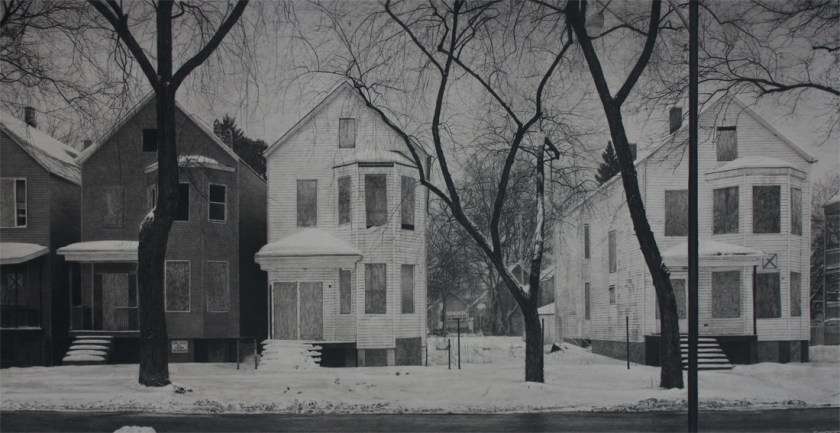
During your presentation at Vermont Studio Center, I was struck by the images of foreclosed and abandoned buildings in Chicago (What was Once a Home). You said this experience led to an interest in disappearing landscapes and places in transition. Can you talk more about the evolution of this interest and where it has taken you?

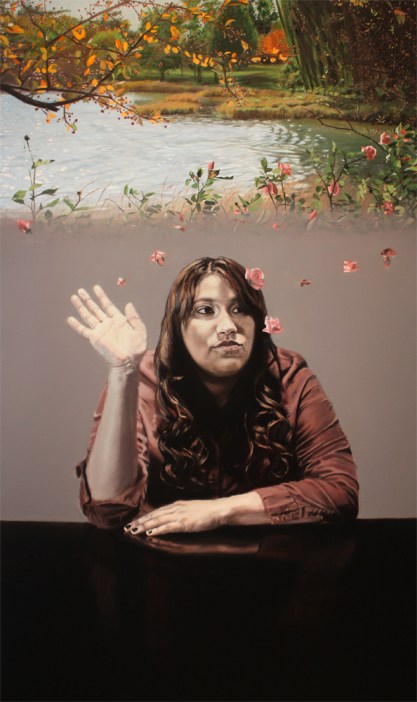
For years, I was a figurative artist interested in making work about imagination amidst a domestic backdrop.  My work began to change when I began a series called “Customer Service,” in which I painted portraits of my fellow customer service workers.  In this series, I began to realize how powerful it could be to use my work to document the world around me. 
3

When I embarked on creating the series What was Once a Home, I was interested in telling the story of these buildings, in the same way a portrait tells us something about the sitter.  At the same time, I wanted to tell a larger story of the society that we live in and the harsh economic inequality that is at the heart of our capitalist system.  I think it was only in the act of creating this work that I felt the importance of documenting these spaces that were quickly being demolished. This interest carried over as I worked on my most recent series “Seen and Unseen,” which reflects upon the climate crisis and changing landscape in Newtok, Alaska.

5

6

The theme of your current exhibit, “Seen and Unseen”,  resonates with me. In writing fiction, a writer’s task is uncover hidden truths, to explore what is below the surface.  Do you see such a connection in your art work?

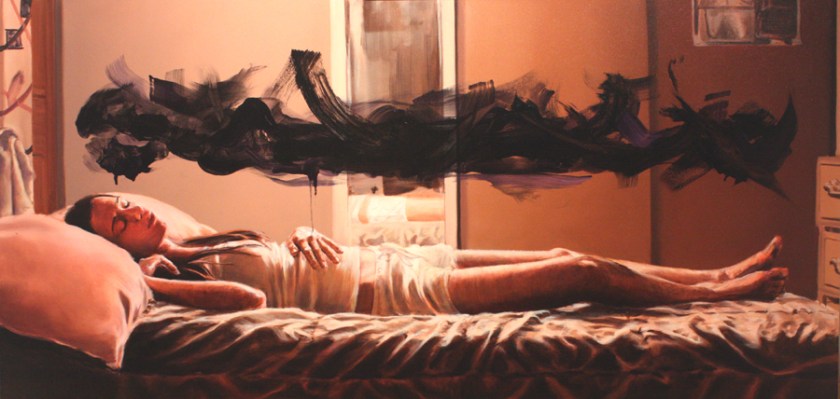
Yes, I do.  I began exploring this concept in my early figurative work.  When I was in college, I enjoyed making work that was about psychology and what lies beneath the surface of everyday life.  This has carried through to my most recent series, which at first appears to depict a quiet landscape, but at its core is a sense of grief for the changing landscapes of our time. 

10

To be truly seen by another human being is a profound experience yet also creates vulnerability.  What do you want your audience to see when they view your paintings of the eroding landscape of Newtok, Alaska?

When viewing Seen and Unseen, I want individuals to be pulled into a space that is beautiful and serene, remote and disconnected.  I want to create a calm and meditative space in which people can contemplate the quietly unfolding crisis taking place in Newtok.  Newtok is a remote Alaska Native village that is eroding dramatically due to the climate crisis.  A combination of thawing permafrost, low levels of sea ice, and strong storms are causing the footprint of Newtok to disappear at an alarming rate.  Some scientists have predicted that in just a few years, Newtok will be gone.  “Seen and Unseen” illustrates a landscape that is in flux, about to disappear as a result of climate change.  Through this work, I hope that viewers can connect with the story of climate change in Newtok on an emotional level. Ultimately, I hope that this can lead to conversations, action, and change. 

seen_and_unseen10_small

9

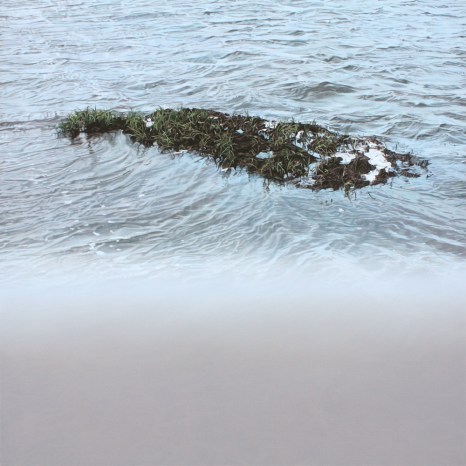
You described the beauty of Lake Michigan as “meditative”.  I think many of us can relate to that feeling around a body of water. Tell us how this contemplative activity led to your Drifting series of paintings?

As a Chicago dweller, I find much peace in the beauty of Lake Michigan.  Prior to my trip to Alaska in June of 2016, I was tasked with creating two paintings for a group show in Italy curated by Sergio Gomez.  I was really excited about the project, but I felt lost about what to create.  All I could think about was my upcoming trip to Alaska, and I wanted to make something that felt connected to what I was about to do. 

I brought my camera to the lakefront, desperately looking for something to photograph.  After half giving up, I found myself sitting at the edge of the water, staring at it and becoming lost in it.  Once in a while, a floating piece of detritus would pass and remind me of where I was.  I thought about where I was and the trip that I was about to take.  I was scared, but the water soothed me.  After staring at the water for a while, I snapped some photos of the water’s surface, trying to capture what I was seeing and how it made me feel.  Those photos became my reference images for the Drifting series. 

8

When did your artistic interest and talent emerge?  What were your early influences?

Like most kids, I really enjoyed art.  I was also very lucky to be surrounded by a team of some of the most creative people around:  my siblings.  Growing up, I was a part of a newspaper, an Olympic sports team, a radio station, an art showcase, a theater troupe, and numerous other ventures spearheaded by my siblings.  I was lucky to be a part of this creative media group, with a patient viewership of two.  I was also lucky to have a grandmother who was an art teacher and artist in her own right, who always placed art supplies in front of any child who would visit her, myself included.

Whether a song writer, novelist, or painter, seasoned artists often have mixed feeling about their early work. You are a young artist. How do you feel about your earlier work? 

I like my early work because it represents where I was at a unique moment in my past.  I enjoy thinking about the larger picture of my work and the thread that weaves everything together.  Even though my current work is much different than my early work, there are still similar undercurrents such as an interest in psychology, science, and the marks that humans are making on this world.
1

 How much of visual art can be taught?  What would you recommend for adults who would like to develop skills in drawing or painting but feel they have no aptitude?

Honestly, I believe that visual art can be taught and learned.  Art can feel so personal, and I think that many students get turned off because they compare themselves with others and feel that they are not good enough.  Or perhaps they have a teacher who says something crushing and makes them feel that they are not good enough.  For some people, this sense of not being good enough can suck the joy from making art.  For those interested in dabbling or developing an artistic practice, I would recommend trying not to let those feelings take over, and instead, trying to pursue art as a means of feeling joy, exploration, self-fulfillment, or any of the other yummy feelings that come from producing art.    

How did you come to choose the mediums for your artwork?  Do you see this changing or expanding in the future?

Oil paint is my home base.  For years, my work felt most appropriate taking the form of large scale oil paintings.  I enjoyed painting the figure close to life size.  I didn’t think much about it for a long time until I started  What was Once a Home–the series of small drawings of foreclosed homes done in carbon pencil on toned paper.  I had never worked with this medium or paper, but I  wanted these pieces to be more intimate in scale with an ephemeral quality, while also capturing the vivid details of the scene.  After doing this, I became more comfortable with shifting my medium. While working on my latest series, I learned how to screen print and decided to incorporate that into the series. 

Jen_Cronin_VSC_2018

Any tips for productivity?

Time management is really difficult as an artist, especially when having to juggle other unrelated jobs.  Waking up early and having positive morning habits in place really changed things for me, and I’m just now trying to pick those habits and routines back up again. 

One really helpful tool that I used as I prepared for a show earlier this year was a calendar that I had posted to my studio door.  Every day that I painted, I added a sticker to the calendar.  On days that I painted for a longer duration, I added a sticker with a greater degree of flair.  It sounds silly, but it made me feel good to see all of the stickers pile up. 

From where do you draw inspiration when the well is dry?

When I’m feeling uninspired, I always find that some time in nature really helps.  Being in Chicago, it can feel like nature doesn’t even exist, but a trip to the lakefront always changes that and gives me a sense of transcendence.  Lately, I haven’t been having problems with the well running dry.  I feel like I come upon ideas left and right, but sometimes it’s hard to know which idea to run with.  For my next project, I’m going to try to work on the idea that is giving me the most joy to think about.

My impression of our time together is that you are a person of warmth, openness, and contentment. Would you agree? Where do you see yourself on the spectrum of “artistic temperament”?  How does your temperament affect your work and creativity?

Spending the past 14 years working in customer service has definitely taught me the importance of having a kind demeanor and allowing those around me to feel heard.  Additionally, I think all of those years in customer service have given me a sense of patience and humility that I’ve carried with me.  Similar to working in customer service, I think that the work of being an artist is uniquely challenging. 

The act of making artwork is incredibly vulnerable.  You put the deepest parts of yourself out there, and it may be met with distaste or total indifference.  And once you’ve finished, you have to do it again, over and over, which requires a lot of patience and grit.  It’s a long way of saying that I don’t know about a spectrum of artistic temperament, but to me it seems that patience and the ability to withstand discomfort are key personality requirements as an artist.

I’ve found the people in Chicago to be incredibly friendly. What is your experience of the Chicago art scene?

I find the Chicago art scene to be warm and welcoming.  The community that I’m a part of is one that believes a rising tide will lift all ships.  I am always blown away by the kindness and generosity that I see demonstrated among fellow artists.  At the same time, I think that there are different bubbles of art communities in Chicago that don’t often intersect. 

Chicago_Inside_Out

Which art museums/galleries—perhaps lesser known– do you recommend?

Well, it may be self-indulgent to talk about the gallery that I work with, but I’m going for it.  About nine years ago, I started showing art at Elephant Room Gallery in Chicago.  It is a small storefront gallery in the South Loop owned by Kimberly and James Atwood.  Kimberly is the curator and she shows work by local emerging artists who often go on to gain great notoriety.  I have found a beautiful community in the artists and patrons that the gallery attracts, and I think the warmth, kindness, and generosity of Kim and James shines through every show that they put on.

Elephant Room Galler

How can we become more creative in our everyday lives, whether or not we see ourselves as artistic?

I believe that every human is creative in one’s own way, no matter the career or life path.  Creativity has nothing to do with how well one can draw or play an instrument.  I believe that creativity and play are two sides of the same coin, and if we want to be more creative, we have to allow ourselves to have more fun. 

I’m all for having more play in our lives. Thank you, Jennifer for sharing your artwork and creative process. 

You can see more of Jennifer Cronin’s paintings on her website.   

Instagram: JenniferCroninArt
Artist portrait photographed by Kimberly Leja Atwood

September Song – Creativity through the Seasons

aaron-burden-1UCj8BZEqRw-unsplash (1)
Aaron Burden
But the days grow short
When you reach September
When the autumn weather
Turns leaves to flame… 
     “September Song”

Does the change of season affect your creativity?  Are you more creative in the winter than fall?

Maybe you live in a part of the world where seasonal changes have more to do with the calendar than the weather. Does it make any difference in your creative output?

Artists are often sensitive to the rhythms and cycles of nature. Poets have long personified the seasons.

No spring nor summer’s beauty hath such grace
As I have seen in one Autumnal face….
~John Donne, “Elegy IX: The Autumnal”

Autumn carries more gold in its pocket than all the other seasons.  ~Jim Bishop

As a writer, I find I’m most creative in the summer time, yet more productive in winter when I’m forced to spend more time indoors. Give me a sunny window and I’m good to go. There are studies to support that seasonal changes influence our creative minds and hearts. One suggests that the warmth of summer may make people more relationally creative. The winter, on the other hand, may inspire more abstract thinking. 

“Shall I compare thee to a summer’s day?”   Shakespeare’s Sonnet 18

I cling to the last days of summer, which isn’t hard to do this time of year in New England. September teases with its brilliant sky, green grass, and 80 degree afternoons. But the subtle signs of change taunt: a smattering of red leaves on the maple tree. The earlier, muted sunsets. The cool nights.

I notice how much of seasonal change involves light—its intensity, color, slant, and warmth. My visual artist friends talk about how natural light variation affects their work. Photographers only get a brief chance to capture a certain light.  Writers can retrace this vanished light with words. I was thinking about this while writing a scene set in early summer on Cape Cod. How do you describe its unique light that changes hour by hour? Set the story in October and you’ll need a different paintbrush to capture the light.

rooms-by-the-sea
Rooms by the Sea (Cape Cod) Edward Hopper 1951

Consider a summer sunset over the ocean. The way you choose to describe this should be filtered through the eyes of the character (or narrator in nonfiction.)  Is the onlooker someone who just lost her father? Now imagine describing the same scene through the eyes of a woman newly married to the love of her life.

Context matters when painting a setting with words. Including seasonal sensory details and images, filtered through point-of-view, can add depth and suggest your story’s mood.

“Autumn burned brightly, a running flame through the mountains, a torch flung to the trees.”   ~Faith Baldwin, American Family

Of all the months, September seems to me to bring the greatest transition. Beginnings and endings. Starts and finishes. Vacation ends. Back-to-school. The Jewish New Year.  To some, it’s a welcome change. To others, a prelude to days lacking in color and warmth. My friend Ruth wilts in the heat of the summer and looks forward the crisp fall days. I, in contrast, bloom in the heat and wilt in the winter.

Oh, the days dwindle down
To a precious few
September, November

Like the seasons, our creativity ebbs and flows. We can recognize this, accept it, and surrender to creativity’s cyclical nature. As I approach the proverbial “end of the tunnel” with my current manuscript in-progress, I hope to bask in the light of accomplishment.

My summer light. 

IMG_8800
Albany, NY
IMG_8851
Walden Pond .  Concord, MA
IMG_8625
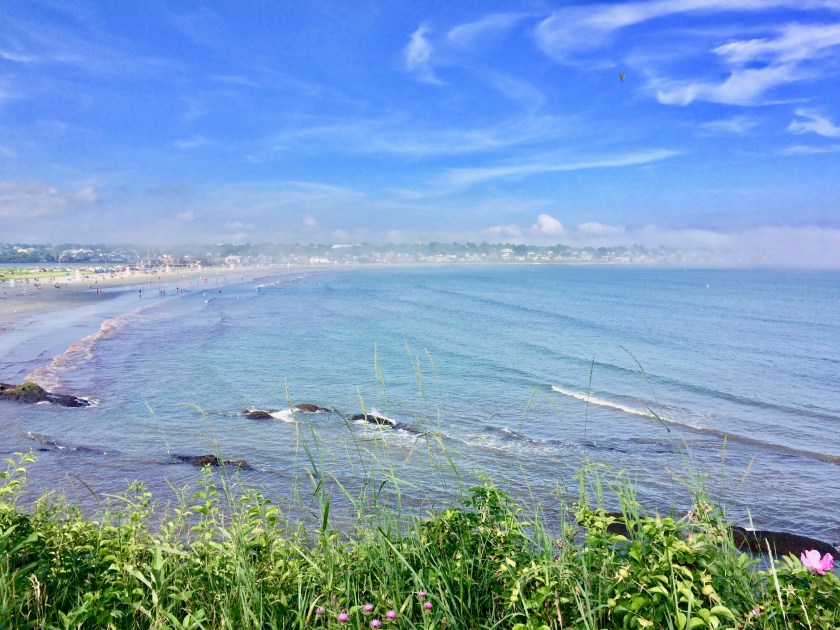
Newport Beach
Processed with VSCO with h1 preset
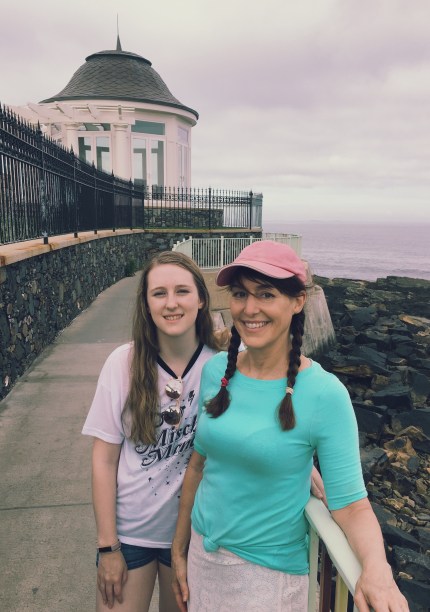
Rhode Island Cliff Walk

~

Dancing on the Moon: What music would you take into space?

Mystery creates wonder and wonder is the basis of man’s desire to understand.
                                                   ~Neil Armstrong

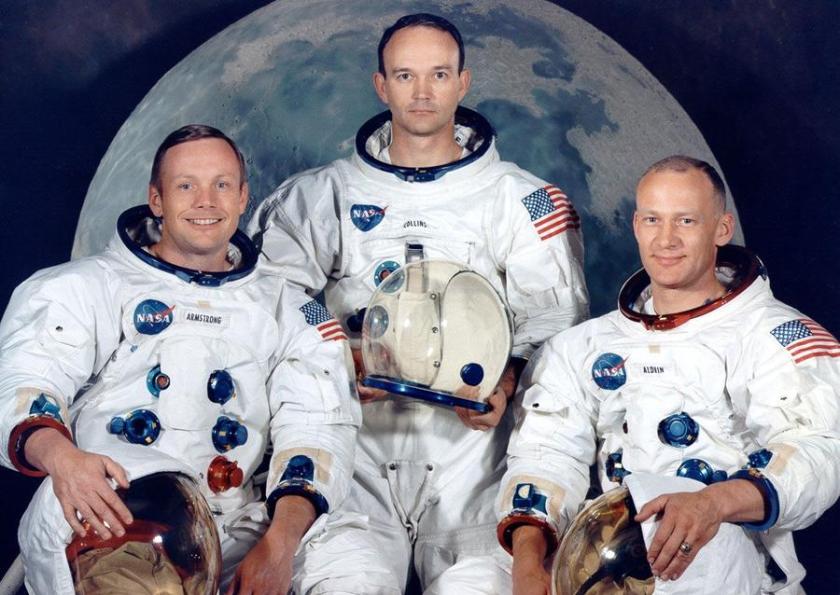
Apollo_11_Crew_NASA

On July 20th, 1969 three Apollo 11 astronauts left the first foot prints on the moon. Fifty years later, we Earthlings remember and celebrate. With so much crumminess happening down on this planet, casting our eyes toward the heavens is a welcome distraction.

July 20th also happens to be my father’s birthday. I wish he were here to witness this historic space anniversary. When I was a little girl, he told me that NASA picked July 20th for the moon landing to honor his birthday. And I believed him. He was, after all, my Olympic Dad.

He bought me my first telescope so I could view the moon from our backyard. 

One of the first songs I learned to play on the piano was a silly tune called, “My Sweetheart’s the Man in the Moon’.  

Years later, while sitting in a college astronomy class, I studied a detailed photograph of the moon.  Then I noticed a surprising detail: there was a crater named Krieger B. My Dad! 

Krieger_Moon_Crater

I photocopied that moon picture.  Then in July, I sent my father a card. Dear Dad, In honor of your birthday, NASA has named a moon crater after you. Love, Evelyn.

In 1984, I applied to the new Teacher-in-Space program created by Ronald Reagan. My initial application was rejected as I did not meet NASA’s minimum age requirement. With the Challenger Shuttle’s tragic outcome, I guess I was lucky not to have won that long shot ticket.

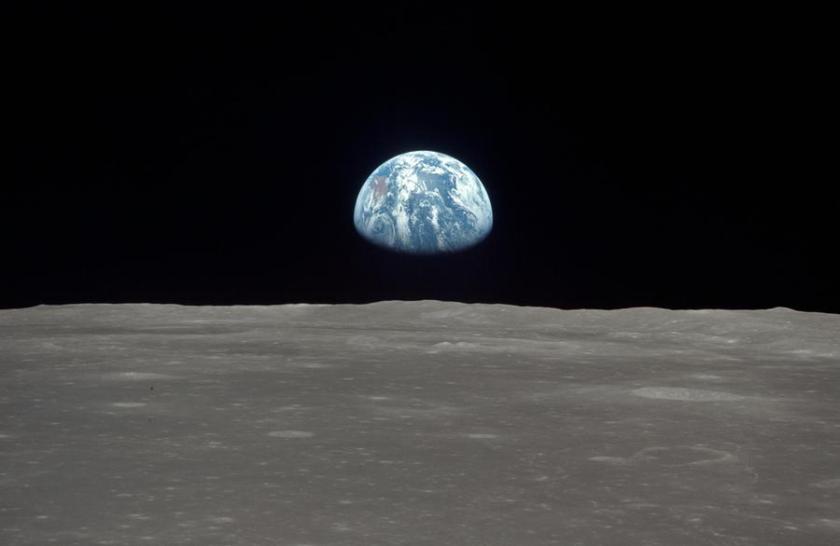
Only a handful of humans have been lucky enough to view our planet Earth floating in space. This cosmic sight has evoked awe, humbleness, and tears. 

Earth_Rising_Moon_View
NASA

“As we got further and further away, it [the Earth] diminished in size. Finally it shrank to the size of a marble, the most beautiful you can imagine.
That beautiful, warm, living object looked so fragile, so delicate, that if you touched it with a finger it would crumble and fall apart. Seeing this has to change a man.”

~James B. Irwin, Astronaut, Apollo Program

As for for the rest of us, we’re left to our imaginations and vicarious experiences like movies, video games, and flight simulators.

HZnKjJ3nSTe3N9KHcW9ktg_thumb_1cda
The closest I’ll get…National Air and Space Museum 2012

If you were to go for a rocket ride, what special items would you take with you?

I’d take my one of Dad’s fencing medals, a Hebrew prayer book, my ballet slippers, a photo of my kids, and a CD of poems a dear someone made for me. 

Buzz Aldrin took holy communion aboard the Apollo 11.

During the Apollo 14 moon mission in 1971, the astronauts packed tree seeds which the  Forest Service later germinated, reaping ‘Moon Trees’. 

When Garret Reisman flew on board the space shuttle Endeavour in 2008, he brought along a vial of dirt from the pitcher’s mound at Yankee Stadium.

Massachusetts native Dr. Jeffrey Hoffman brought several Jewish heritage items-dreidel, mini Torah scroll, menorah— aboard his space shuttle trips.

Recently I learned that the Apollo astronauts brought a cassette tape of their favorite tunes to listen en route and during their historic moon walk.

Buzz Aldrin played one of my dance favorites as he stepped onto the lunar surface:  Frank Sinatra’s 1964 ‘Fly Me To The Moon’– an obviously perfect choice.

Buzz_Aldrin_Moon_Walk
Buzz Aldrin   NASA

Other songs on Aldrin’s playlist included:

‘Mother Country’ by John Stewart

‘People’ by Barbara Streisand

‘Everyone’s Gone to the Moon’ by Jonathan King

‘Spinning Wheels’ by Blood, Sweat, & Tears

“Angel of the Morning’ by Betty Swann.

In June, #NASAMoonMusic put out a request for public votes of tunes for the planned 2024 lunar return trip–when the first woman will walk.  Out of the one million suggestions (surely many repeats), 500 songs made the final playlist—enough music for a 3 day journey.

Sinatra’s swinging  hit was no. 2.

Another old favorite of mine, ‘Moon River’,  was 106 on the list, though not the version I like.

I was surprised that no classical pieces made the list. Gee, not even Debussy’s ‘Claire de lune?’  Or Dvorak’s haunting, Song to the Moon?

Star Trek composer Michael Giaccino wrote Voyage, a concert piece that aims to recreate the feeling of launch day–from the astronaut’s waking up to buckling in the capsule to blasting off. floating, landing, and returning home.

What music would be on your space playlist?

              “I’ll be looking at the moon, but I’ll be seeing you…”

Library Love: Review of The Library Book

Review of The Library book by Susan Orlean

the-library-book-9781476740188_lg

“In the library, time is dammed up – not just stopped but saved. The library is a gathering pool of narratives and of the people who come to find them. It is where we can glimpse immortality; in the library, we can live forever.”

I just finished reading Susan Orlean’s latest nonfiction, The Library Book, which got me reminiscing about the magical childhood hours I spent at the Carl Sandburg Library. I can still see the famous poet’s bronze statue staring down at me each time I approached the circulation desk.  I remember the conspiratorial smile the librarian gave me when I checked out my first book from the Adult Section: How to Increase Your Intelligence in 30 Days. ( Yes, even back then, little Evelyn was on the path to self-improvement.)

The Library Book (Simon & Schuster 2018) is an ode to libraries past and present. It is a thoroughly researched and captivating story of the catastrophic fire that engulfed the Los Angeles Library on April 28, 1986. Orlean’s vivid description, along with eye-witness  accounts, bring this devastating day and its aftermath to life.

“In Senegal, the polite expression for saying someone died is to say his or her library has burned.”

Ordinarily, I don’t like books about fires, but The Library Book contains so much more. In trying to decipher the mystery of the library (arson is suspected), Orlean takes us on a journey of fascinating real-life characters, political intrigue, romance, library architecture, book love, and the evolution of the library itself going back to the 1800’s.

“A library is a good place to soften solitude; a place where you feel part of a conversation that has gone on for hundreds and hundreds of years even when you’re all alone.”

Sprinkled into this rich story are Orlean’s own fond childhood reminiscences of visiting the library with her mother who now has dementia.

I highly recommend the Library Book to library lovers and bibliophiles who also enjoy history and true crime mysteries. 

Growing up, the library was my oasis. It still is. When I find myself in new areas, I often look for the local library. From the sparkling modern to the creaking historical—I love them all. 

Here are a few of my favorites.

1.  Johnson Public Library,  Johnson Vermont.

Only library in town. Tiny but cozy, with a sunny reading nook. Friendly staff. Great poetry collection. Near the Vermont Studio Center artist residence.

IMG_7769.jpeg“In times of trouble, libraries are sanctuaries.”

2. Harold Washington Library, Chicago

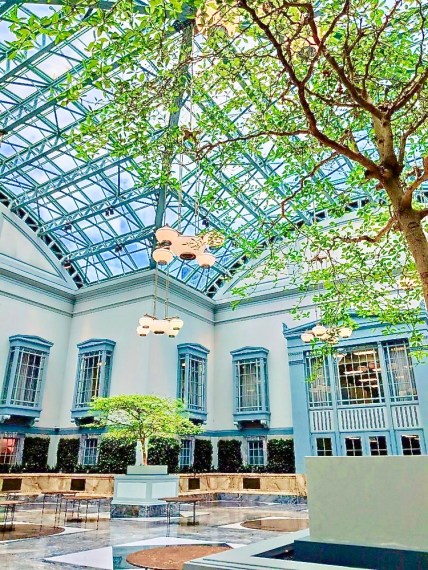
A huge library with stunning architecture. A variety of interesting artwork on each of the 11 floors. Beautiful roof top garden atrium. You can easily spend a day here.

Harold Library

=Image 7-13-19 at 5.43 PM.jpeg

“The library is a whispering post. You don`t need to take a book off a shelf to know there is a voice inside that is waiting to speak to you..”

2. Memorial Library, Booth Bay Harbor, Maine

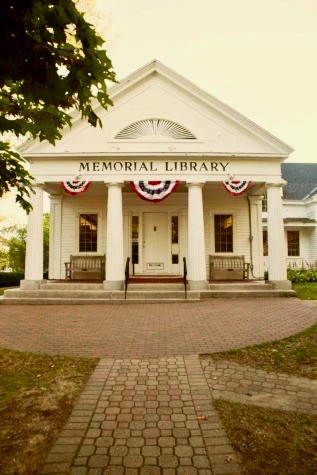
This Greek-revival style library has been remodeled since its 1906 inception. Behind the library is a porched Friends Store–a treasure trove of bargain books. Wonderful children’s space.

Heidi-Kirn_MG_1085-317x475.jpeg
Heidi Kirn

Image 7-13-19 at 5.53 PM.jpeg

“Public libraries in the United States outnumber McDonald’s; they outnumber retail bookstores two to one.”

4. Providence Atheneum, Providence, Rhode Island

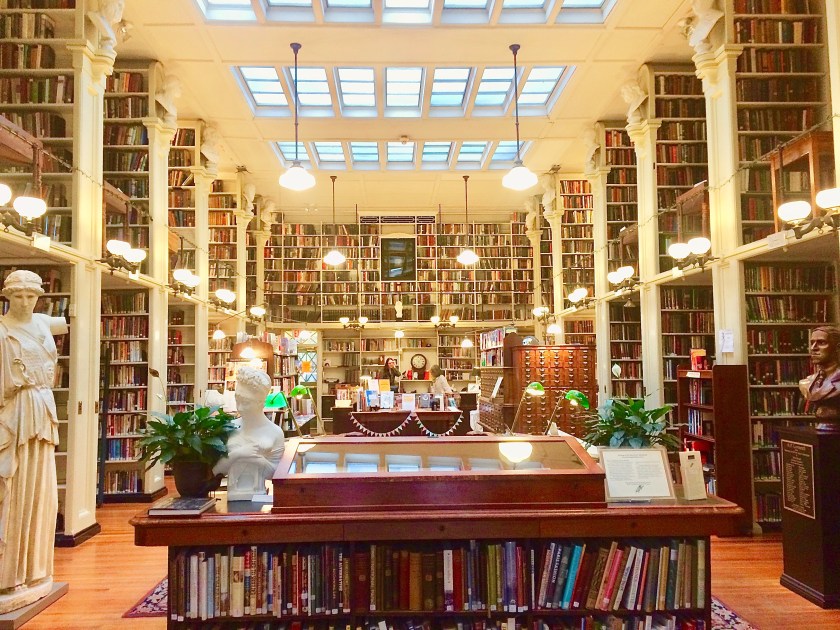
An independent, member-supported library open to the public since 1838. Near campus of Brown University. Its Greek temple style architecture and high ceilings make this small library feel spacious. Special antique and first edition collections of children’s books, nature, art, and British and American literature.

IMG_7847.jpeg

IMG_7844


ProvAth_Mezzanine-Studying.jpeg
Nat Rae. ProvidenceAnthenuem.org

5. Fogg Library, S. Weymouth, MA

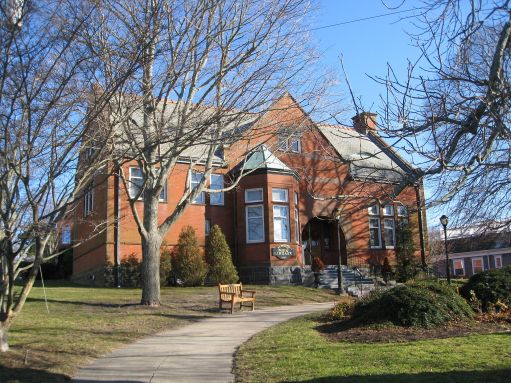
Renaissance Revival stone library built in 1897.  The historical building houses a children’s library and lovely upstairs study space.


“The library is a prerequisite to let citizens make use of their right to information and freedom of speech. Free access to information is necessary in a democratic society, for open debate and creation of public opinion.”

6. Eldredge Library, Chatham, MA

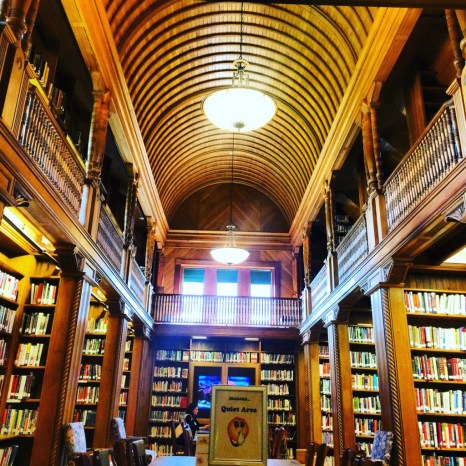
Small-town historic library on Cape Cod. Its stain-glass windows, oak wainscoting, marble foyer, and large wooden mantle fireplace take you back in time.

ChathamMAlibrary

7. West Bloomfield Township Library, W. Bloomfield, MI

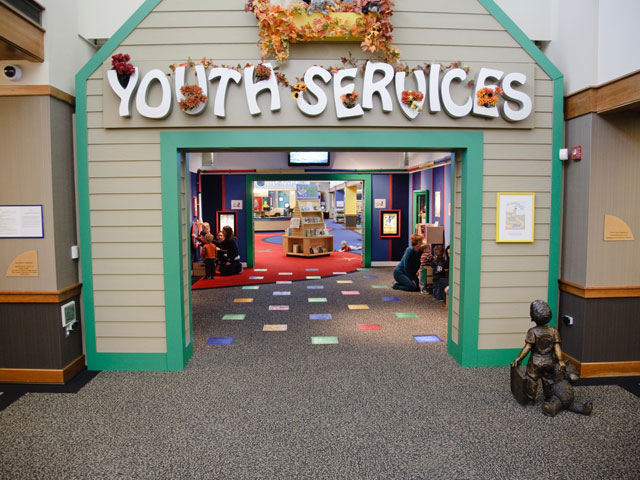
A National Medal modern library with inviting spaces for all. Fabulous children’s area. Garden terrace with tables. A gift shop, too!

West_Bloomfield_Library_Front
wblip.org


W. Bloomfield Library1.jpg
wblib.org
West_Bloomfield_Youth_Library
wblib.org

8. Ames Free Library, Easton, MA

An architectural gem, opened 1883. A spiral staircase connects the two floors. Peaceful landscaped gardens with pond and fountain. Truly a sanctuary.

Ames (North_Easton,_

UNADJUSTEDNONRAW_thumb_3a13IMG_E7453.jpg

9. New York Public Library, 42nd Street and Fifth Ave.

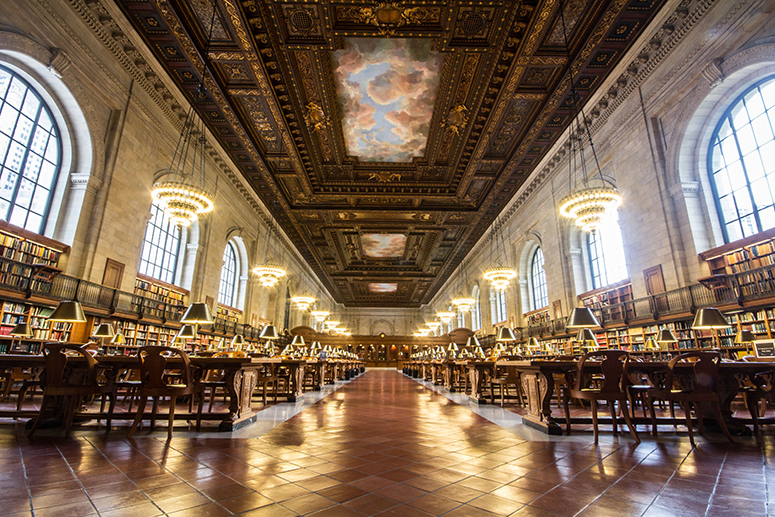
While not exactly a cozy reading library in my mind, it’s not to be missed. Take a free tour. Enjoy the famous “between the lions” steps, the grand foyer, impressive architecture, art collection, classic reading room, map room, and special exhibits. (Walt Whitman:American Poet through 8/30/19). The gift shop is my favorite!

New-York-Public-Library-NYC-3

NY Public_2014_09_18_sasb_reading_room (2)
nypl.org

“The number of books destroyed or spoiled was equal to the entirety of fifteen typical branch libraries. It was the greatest loss to any public library in the history of the United States.”

10.  My Secret Library Writing Room

LIbrary Spot

Which library do you love?


Missing Your Dad on Father’s Day

What Father’s Day means when your father isn’t alive.

Father's Day Card


In May 2016 I was shopping in Target when I saw a display of Father’s Day cards. I’d always sent a special card to my Dad and decided I’d pick one out right then. While surveying the multitude of choices, a force of reckoning hit my chest.

I don’t need to buy him a card this year.

My father was dead. For six whole months.

How could I have forgotten? 

I blinked back a surprise of tears. In that small space of forgetting, my father had come alive again.

“Come back. Even as a shadow, even as a dream.”Euripides

Maybe you’ve had such an experience, too. You pick up the phone thinking you’re going to call your Dad (or your mother, aunt, brother, friend) only to remember…  

Or maybe you’ve had a vivid dream of being with your dad–a dream so real that when you awoke it took a moment to believe it hadn’t actually happened.

A period of disbelief  often follows the loss of a loved one. This feeling can be more more pronounced when the death comes suddenly and inexplicably, as was the case with my dad.  Not seeing him buried, or having stood at his grave site, added to the feeling of unreality. And because we lived in different cities, it was easier to believe he was still in Florida enjoying the sunshine. 

From Homer to Shakespeare, mythology and literature are replete with stories of characters grappling to accept death’s permanence.  Sigmund Freud wrote that an essential component of the complex “grief work” is coming to terms with the fact that our loved one is physically and permanently gone.

“Mourning has a quiet precise physical task to perform: its function is to detach the survivor’s memories and hopes from the dead.”

Sounds like a good plan.

Yet when Freud lost his dear daughter Sophie to influenza, and then later, Sophie’s beloved only surviving son, Dr. Freud remained inconsolable and unable to follow his own prescription for mourning.

In Joan Didion’s exquisite grief memoir, My Year of Magical Thinking, she potently describes the disbelief that grips us after losing a loved one.  Joan’s husband of 40 years dropped dead of a massive heart attack as the couple sat down to dinner one evening.  

It was in fact the ordinary nature of everything preceding the event that prevented me from truly believing it had happened, absorbing it, incorporating it, getting past it.”

Didion is taken aback by the irrational belief that her husband will return. She can’t bring herself to give away the clothes he may be needing.

“Bringing him back” had been through those months my hidden focus, a magic trick.”

We attempt to keep our loved ones alive by holding onto momentos—a watch, tie, jacket, hairbrush, written letters—as if we are able to contain their physical presence within the object. 

We’re afraid of forgetting them—and of letting go.

He was my North, my South, my East, and my West my working week and my Sunday rest.  ~ W.H. Auden, “Funeral Blues”

On my desk, I keep favorite photos of Dad, a few of his fencing medals, a handwritten letter, and his Olympic baseball cap.

Dad&Me_80th bday
Me and Dad, July 1990

As Joan writes: “I know why we try to keep the dead alive: we try to keep them alive in order to keep them with us. I also know that if we are to live ourselves there comes a point at which we must relinquish the dead, let them go, keep them dead. ”

I’m lucky to have had may father for many years and many chances to share my love and appreciation. My heart breaks for those who have lost their father at a young age.  Growing up without a father can have longterm psychological effects. Children are particularly vulnerable to the belief that their father will “return”.   The experience leaves a gaping  hole of missed moments and opportunity.  The surviving adult-child’s life is shadowed with “what might have been” . 

My friend/mentor Nechama Laber lost her father at age ten. She didn’t know he had been ill and never got to said goodbye. It wasn’t until Nechama was a grown woman that she came to realize the full impact of his absence on her emotional well-being.

Nechama has since devoted herself to continuing her father Rabbi Azriel Wasserman’s legacy of Jewish learning. This summer she will publish a book celebrating his life and teachings: Finding the Song in Sorrow – My journey from Loss to legacy to Light!

Blogger Leslie Spencer (lifewithoutmydad.com) also lost her father at age ten.  Her 2017 post about being a fatherless daughter on Father’s Day is particularly poignant. She offers her approach to facing this time of year.

By age 25, author Claire Bidwell Smith, had lost both her parents to cancer. For the past 10 plus, Claire has supported others through grief workshops, retreats, podcasts, online programs, and individual counseling. 

If you are missing your Dad this Father’s Day, try to do something that honors his memory: donate to charity, write him a letter, cook his favorite dish, make a photo album, or share a story about him.

And if you never knew your dad, or are estranged, then honor another special dad you care about. 

After getting through the first Father’s Day without my dad, I do not feel anywhere near the pain I feel on his death anniversary.  That day triggers traumatic memories. 

And yet…

My dad died on my son’s birthday—one of the happiest days of my life.

I hope I get to see my son become a dad.

I look forward to sending him a Father’s Day card.

2%rsVIGkQC21diz5VPjDQg_thumb_3474
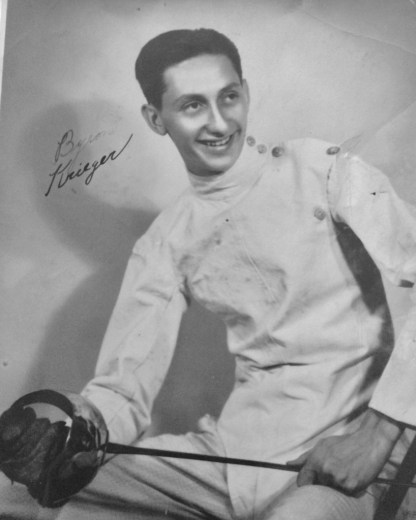
Byron Krieger as a collegiate fencer.
ZAPbMeY8S6qXU9mzvpv7Pw_thumb_1fd2
Grandson Sam as a collegiate fencer