Do You Write on Your Vacation?

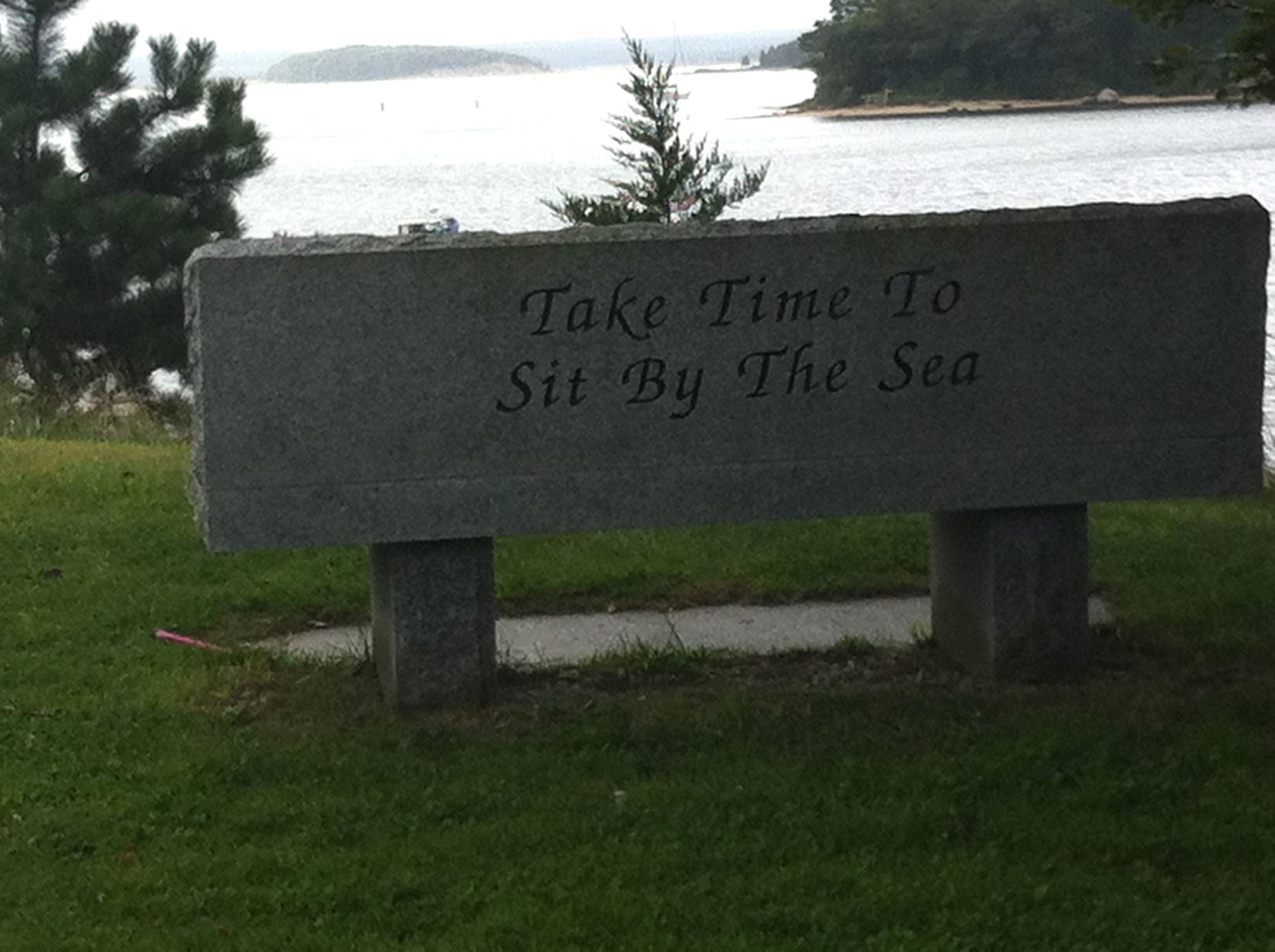
I did sit on this very bench overlooking Onset Bay.

As we were packing for a family trip to Cape Cod, my husband asked me if I was taking my lap top.

“Are you kidding?” I replied.

“What I mean is, are you planning on working?” he said.

My answer, of course was, “Of course.”

By working, he meant writing. “Isn’t it a good idea to take time off for a vacation?” he asked. “Clear your mind for new ideas? Come back refreshed?”

What he meant was: How much time are you going to be off (alone) writing?

Anyone who is married to a writer will have this conversation.

In his memoir, On Writing, Stephen King says that when he is in the middle of a project he writes every day, including Christmas, Fourth of July, and his birthday. (I remember rereading that part a few times.) King advises aspiring writers not to take off more than a day when they are in the midst of crafting a story.  “You’ll lose the urgency and immediacy of your story if you do.”

I recently heard novelist Richard Ford, author of Canada, describe similar work habits.

But these guys are older, empty-nester, best-selling, full-time writers who probably don’t do the laundry.  Right?

Novelist and writing teacher, Aimee Bender, wrote about the importance of a regular writing routine in her essay,“A Contract of One’s Own” . Aimee’s writing self-contract has rules, consequences, and rewards. Aimee writes daily for two hours, in the same place, with no distractions or breaks, 5-6 days a week, rain or shine.  And she has been at it for 17 years. “Writing everyday can be a powerful action, a gesture of belief in one’s own imagination…”

While I’m a believer in taking time off for renewal (heck, why not for fun, too?), our family vacation to Cape Cod coincided with the time I devote to writing–the summer.  I enjoy having a break from teaching, scheduling, and chauferring my kids around.  I love taking my laptop outside on our sunny patio and being able to write for a few hours straight.

So as our family packed up the van, I felt like I had already been on vacation. Why should I  take a double vacation?  I worried that a week off from my writing would not only put me behind, but put me on the slippery slope to Procrastination Island.

Of course I didn’t want to ruin it for everyone else. And since I am fighting those workaholic tendencies, I compromised.  I told my husband that I’d write just an hour a day, maybe early in the morning before everyone gets up, or late in the evening. And then, I’d turn into a fun person.

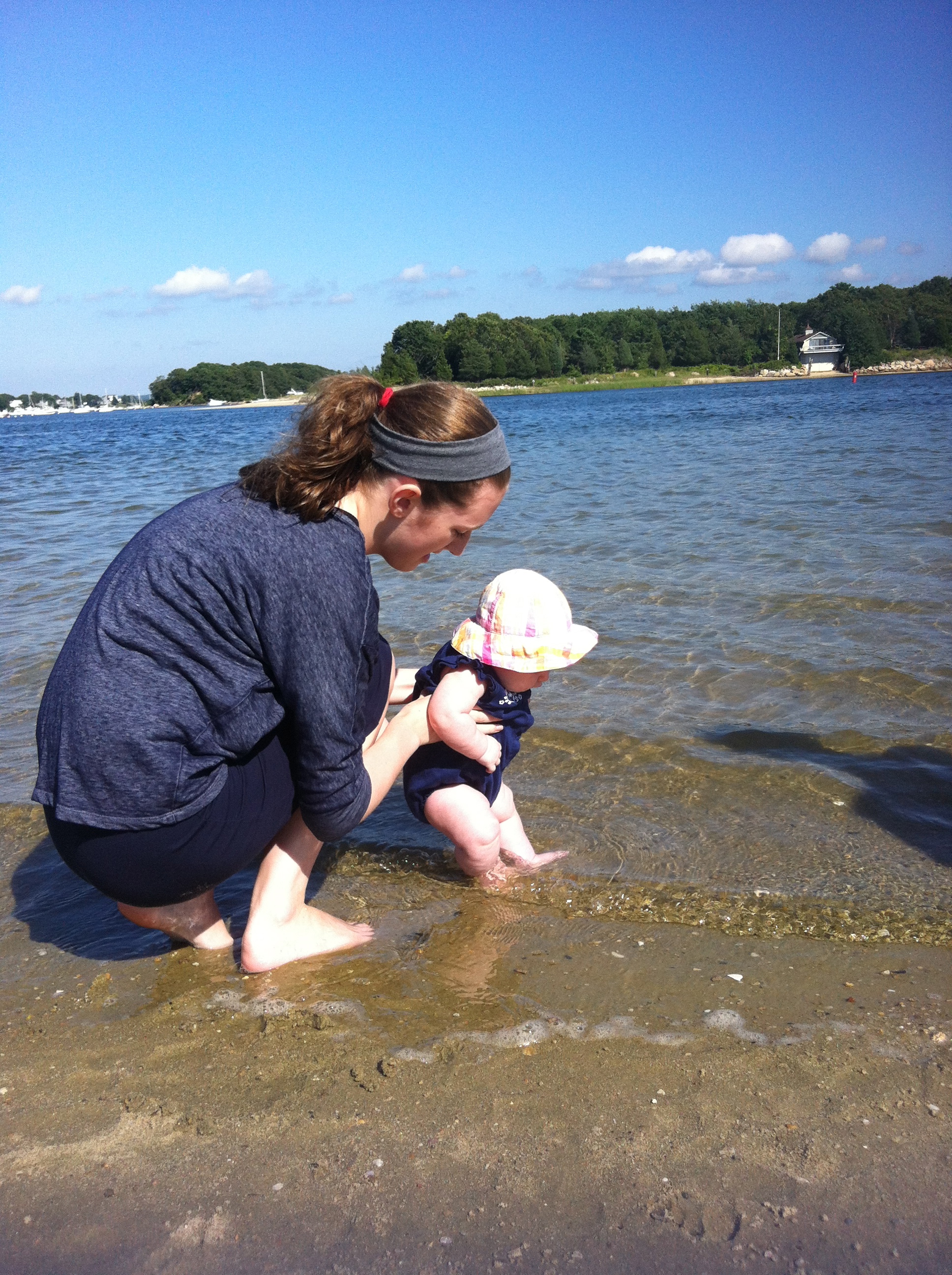
Here’s what really happened. After a day at the beach, I crashed at 9:00 pm. Then  I overslept. Then my daughter visited for a couple days with her husband and baby and I wanted to spend every minute with them.  Then my fourteen-year-old daughter asked me to eat an early breakfast with her on the beach. (Lovely.) Then my husband suggested we have coffee at the cafe around the corner from our rented house.

I didn’t write a word the entire week.

But…I did let my characters visit and show me their wild side. As I walked along the shore, new writing ideas rolled in like gentle waves.  And yes, I did come back refreshed and renewed.

Do you take vacations from writing?  If so, when, and for how long?

Look–no laptop!

Writing From A Place of Honesty

Image

 I love reading memoirs. I am fascinated by how a writer structures the chaos and complexities of a life into a narrative.  I also wonder how you get over the fear of exposure, of being judged, of hurting friends and family? As Anne Lamont says, “We write to expose the unexposed.”   How many writers out there still fear exposure, though, when we live in an age of overexposure?

I am a private person and have become more so as I’ve gotten older.  In this cyber age of platform building and social networking, no writer is an island.  Nor can she afford to be.  I may have the life material to craft a compelling memoir, but I am not ready to run naked through the streets. And I may never be. For now, I prefer to select excerpts from my life. Exploring ideas, insights, and truths in this way allows me to both shape and contain the experience and still keep some curtains closed.

This June, I opened a curtain when my essay, “Letting Go” was published in Tablet Magazine.  The personal essay expressed my mixed feelings about my 20-year-old daughter’s engagement and marriage. I hoped my experience would help other parents of kids who take-off early.  Tackling this particular topic was a big leap in terms of my comfort level. The published piece is much different than the one I had originally submitted.  The editor, Wayne Hoffman, pushed me to dig deeper–to write from a place of truth and honesty–from the heart. I almost didn’t make the requested revisions, but once I worked through the fear of vulnerability, I found my real voice. The result was very satisfying.  An added bonus was when the Tablet editor called to say how much he loved my revised essay.

Readers responded to this honesty. The online comments and email feedback, mostly positive, provided an instant connection with my readers, which was both exciting and scary. Here is one of my favorites, (sent via email).

Evelyn

I’m sitting at my desk at work wiping tears from my cheeks. Your article is so beautiful and right on target. It resonates so deeply- you captured the emotions and dialogue perfectly.  

“Letting Go” was picked up by the New York Times Motherlode blog the same day it appeared in the Tablet. Instantly, my audience (and exposure) widened. Blogger KJ Dell’Antonia invited readers to share thoughts on the topic of marrying at a very young age.  I was surprised by how many NYT commenters seemed not to have read my entire essay, yet still had a strong opinion about it.  Writing openly about your life opens you up to the critics, of course. No dodging that bullet. The diverse reactions on Motherlode reminded me how we each project our life view into what we read and that being “open-minded” is easier said than done.

So, my advice to other private-by-nature people who want to write about very personal experiences in today’s online world? Grow a thick skin; you won’t die of exposure.

And what about you? Do you find it hard to draw the curtains when you write about your life?  How do you decide what is okay to reveal about family members, especially your children?  Or are you happy to run naked through the streets?

Summer Reading


I live for summer.

As a sufferer of SAD,(seasonal affective disorder) the spring clock change kicks me into gear.  By June, I’m ready to fly. The summer break from my teaching job allows for more intense writing time.  These long stretches of time bring its own challenges and pressures.  Produce! Publish!

My self-imposed writing regimen also conflicts with another desire: to read a ton of books. In my world, one of the small pleasures in life  is coming home from the library on a Friday afternoon with a bag full of new books.  I’ve heard some writers say that they don’t read fiction while working on their novels.  This would be a hard practice for me to follow.  I find that reading certain authors inspire my own work.

When I was working on my YA novel, One Is Not A Lonely Number, I read  children’s novels with female narrators, like in my own story.  If I am working on a short story, I turn to my favorite writers for inspiration in language and voice. One of my favorite collections is Olive Kitteridge by Elizabeth Strout.  The plotting, dialogue, insights, and language just blows me away.

When I get stuck, I reread my writing bibles: Bird by Bird by Anne Lamont, On Writing by Stephen King, and Stein on Writing by Sol Stein. As for those beach books–they are my reward for putting in chair time, for typing those 1000 words.  So this summer I hope to read:  Binocular Vision by Edith Pearlman, Delirium by Lauren Oliver, More Cake and Lots of Candles by Anna Quindlen, Canada by Richard Ford, and Creating Innovators by Tony Wagner.

What’s on your list?

How many books will you write this year?

Sunday afternoons I usually devote to writing projects.  This Mother’s Day, after a little prompting from my family, I took the entire day off.  And I enjoyed myself!  That is, until later that evening when a NY Times headline caught my eye: Writer’s Cramp: In-E-Reader Era, a Book a Year is Slacking.

Oh, my.

Those commercial fiction writers who previously managed to put out a book a year are now “pulling the literary equivalent of a double shift.”  These writers, whom we love and hate, are churning out extras–short stories, novellas, e-books– to satisfy their impatient readers whose attention spans have shortened, thanks to our revved up world.

Thriller writer Lisa Scottline has revved up her daily quota to 2000 words.  That translates into a 12/7 workweek.

Best-selling literary novelists are, so far, off the hook. (Go ahead, take your ten years. We still love you!)  Since I don’t belong to either camp (not yet), I’m wondering what to make of this madness.  Between book marketing, building my platform, speaking engagements, circulating short stories, writing query letters, entering competitions, raising my kids, and the Other job, my next novel is still in note form.

Maybe I could offer this for 99 cents while my fans await the real thing.

Let’s suppose that you could (or do) write full-time?  How many books could you (would you) write in one year?

Supporting Young Writers

The NY Times featured an article today about children and teen writers whose parents have helped them self-publish their writing. One boy sold 700 copies of his book so far. These are ambitious kids who love to write and are taking advantage of today’s easy publishing technology like Iuniverse and Lulu. It’s hard to imagine anyone getting too bent out of shape about this kind of creative endeavor. Still, the adult naysayers couldn’t keep quiet.

“What’s next?” asked the novelist Tom Robbins. “Kiddie architects, juvenile dentists, 11-year-old rocket scientists? Any parent who thinks that the crafting of engrossing, meaningful, publishable fiction requires less talent and experience than designing a house, extracting a wisdom tooth, or supervising a lunar probe is, frankly, delusional.”

“There are no prodigies in literature,” Mr. Robbins said. “Literature requires experience, in a way that mathematics and music do not.”

Perhaps it is true that there are “no prodigies in literature”, as Mr. Robbins asserts, but does that mean young writers have nothing meaningful to say or imagine? Is it not possible for a teen to craft an engaging fantasy novel?

Yes, young writers should study craft, revise, and work with an editor before presenting their work to the world, but need we put an age limit on publishing opportunities?   With educators today lamenting that kids can’t write and don’t read, shouldn’t we celebrate those who can and do by encouraging them to reach for their dreams?

Last week, I addressed a room full of award-winning authors–all under the age of eighteen.  These kids were top winners in the Young Authors of Maryland Annual Writing Contest.  The award reception was held during the State of Maryland International Reading Conference.  I told the students that when I was a seventh-grader I won my first short story contest in the Detroit News Scholastic Writing Awards.

“That little taste of recognition sparked the fire of possibility in a shy and insecure adolescent. I had a story to tell, and someone thought it was good!”

Kudos to those young Maryland authors, their proud parents and teachers. You don’t need to be a literary prodigy to publish your writing. Keep reading, writing, revising, living, loving, and learning. The words will follow.