What Would You Do If You Weren’t Afraid?

What would you do if you weren’t afraid?

parasailing-in-sunny-day
Thrillspire.com

What would you do if you weren’t afraid?

I asked this question to friends and readers ages 20-65.  Here are a few of the replies:

  • Write a memoir and not worry about what my family thinks.
  • Quit my job and find a better one.
  • Start online dating. Again.
  • Become a foster parent.
  • Ask him out on a date.
  • Learn ballroom dancing at age 65. 
  • Travel the world–all 4 corners
  • Overcome fear of water and scuba dive the Barrier Reef.
  • Be more adventurous outside my comfort zone.
  • Dial up my appetite for taking risks to say things that might upset others.

Interestingly, one responder wrote:  “My first thought is that I would make foolhardy mistakes that my justified fears keep me safe from making.” 

Good point. But fear and caution are not the same.  

And here’s a response from a middle-aged man that touched me most.

“If I wasn’t afraid, I would become the Me I was born to be.”

Notice the essential verbs in the above answers?  Start, become, go, ask, learn…

Fear can hold us back from achieving our goals, realizing our potential, and trying new things.  We know this in our hearts but have trouble moving past it.  

Fear of risk. 

Fear of discomfort.

Fear of failure. 

Fear of being judged.

Fear of looking like a fool. 

Fear of getting emotionally hurt. 

Fear of the unfamiliar.

Fear of the unknown. 

Fear of the Blank Page

Writers are no strangers to fear.    

Do I really have any talent? Will anyone care what I have to say? What if my writing is crap? What if I lose my creative spark? What if my book never gets published? 

Name your writing fear. Say hello. Shake hands. Then wrestle it to the ground. 

fearofwriting

You’ll probably have to do this on most days.

Know that wherever you are in your creative journey, you have plenty of company. Face the fear and write anyway.  

“Fear is felt by writers at every level. Anxiety accompanies the first word they put on paper and the last.”
― Ralph Keyes, The Courage to Write: How Writers Transcend Fear

What would you do if you weren’t afraid

Here’s one of my answers.  Ride on a space shuttle.  

Surprised?

Since childhood, I’ve been fascinated by people who do bold, physically demanding activities. Motorcycle stunt riders, platform divers, tightrope walkers. My mother tells me that while watching the Ringling Bros. circus I was drawn to the woman being shot out of a giant cannon. Astronauts were my heroes.

Lest you think, I was a kid daredevil—not a chance. The scariest thing I did was ride a bicycle down a hill while sitting backward.  Oh, here’s where I should mention my fear of heights. While I loved amusement park rides that spun me around, fear of heights kept me from the Ferris Wheel and giant roller coaster. 
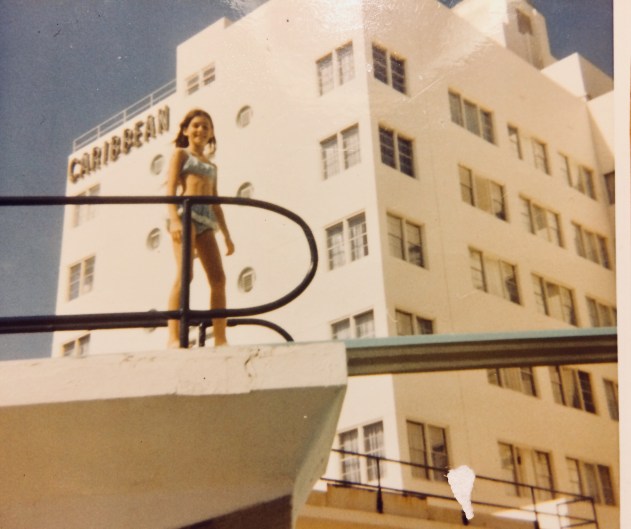
Evelyn_Diving_Florida
Me, age 11, on the high dive in Miami. Never jumped. Just wanted to impress my friends.

Then came claustrophobia. (Perhaps its origins can be traced to my brothers zipping me inside a sleeping bag. Or maybe getting forcibly held underwater in a swimming pool?)

Yet, I still wanted to be that girl who could blast into space.

Along with dreams of becoming a teacher, writer, and dancer, I harbored a secret desire to ride in a rocket ship one day.

Then, in my early twenties, I developed an extreme fear of flying.

So much for going to the moon.

Enter my fearless friend George who thrived on physical risk-taking. George tried to get me to go skydiving with him.

tandem-skydiving-in-MA
Jumptown in Massachusetts

He showed me videos of his fantastic jumps. He broke down the mechanics, safety features, let me examine the parachute. He promised to hold on to me. I enjoyed this vicarious adventure but knew I’d never jump out of an airplane.

Performing a grand jete in ballet class would have to remain my “airborne” thrill.

ballet-black-and-white-dancer-leap-Favim.com-2053016

Learning from the Pros

In June 2017, Alex Hunnold, 31, became the first person to scale El Capitan in Yosemite–a 3,000-ft monstrous granite wall…without using ropes or other safety gear. Only his hands and feet. Alex’s incredible historic event is documented in a new National Geographic Film, Free Solo

Just watching a clip gave me vertigo.

In this crazy sport, there is no room for error. A mistake means death.
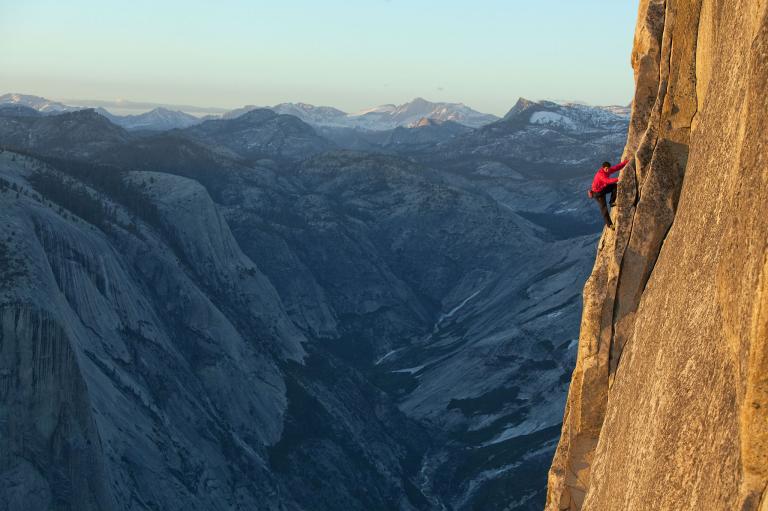
07AlexHonnold.adapt.768.1
National Geographic, Free Solo.

Most of us will never have what it takes to climb a rocky ledge or become an astronaut. Most of us probably wouldn’t even want to. What draws me to these fantastical feats is the question of how he or she overcame the Fear Factor.

Through years of intense training, Alex developed an astonishingly strong mental ability to control fear. So much so that neuroscientists are studying his brain. In an MRA scan experiment, Dr. Jane Joseph reported zero activation in Alex’s amygdala–the “fear center” of the brain. 

“A lot of people say I don’t feel fear, or that I don’t fear death, but that’s just not true!…I think I just have more of an acceptance that I will die at some point. I understand that, but I don’t want to baby myself along the way. I want to live in a certain way, which requires taking a higher degree of risk, and that’s acceptable to me.”   (National  Geographic)

Facing Your Fears From The Ground Up: For Normal Folks

Challenge your fears.

Set a goal.

Plan and Prepare.

Take baby steps.

Practice

Focus on the rewards

Repeat

This all takes courage.

Courage doesn’t mean fearlessness. Courage is facing your fear and doing it anyway. Courage is a muscle. 

I’m happy to report that I’ve worked through some of my long-time fears. Though I’ll never be a comfortable flyer, I still board the plane, anyway. I practice relaxation techniques.  I focus on where I’m traveling to and who I’ll get to see. The fear is no longer in charge.

I can now drive across major bridges without getting panicky.

But don’t ask me to go caving or enter a submarine!

The kind of risks I’m comfortable taking are mostly in the emotional realm. Relationships. New experiences. Adventures…as long as they take place on the ground.

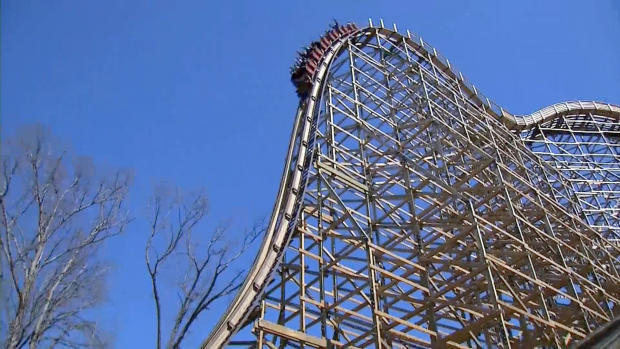
Writing fiction gives you a chance to live other lives. The main character in my new story is an 11-year-old girl who plans to ride every roller coaster in the world and grow up to be an astronaut.
Roller_coaster_620x349
CBS News

Sometimes when I feel discouraged by the limitations my fears bring, I remember the prolific writer Ray Bradbury, whose science fiction stories launched his readers into outer space.  

In real life, Mr. Bradbury was terrified to get on a plane. 

What would you do if you weren’t afraid? Have you faced a fear?

Send Your Writing Into The World: Don’t Give Up

A short story by Evelyn Krieger, published in Gemini Magazine. “Mom is in our hotel bathroom fixing herself up.”

blogger

“A short story is a love affair; a novel is a marriage.”

I have a new short story publication to share. “Her Last Dance” appeared in the August issue of Gemini Magazine.

It’s scary sending your work out in the world.  First, there’s the inevitable rejection that’s simply part of the submission process. Happens to all writers, no matter how experienced or well-published. Keep revising and submitting. Get critiques. Don’t give up.

Even when your story, essay, article (or book) finds a home, you may wonder how it will be received.  This can be particularly concerning when publishing personal essays or opinion pieces.

So far, the response to “Her Last Dance” has been positive.  Gemini Editor David Bright said he and the judges were very moved by my story.  One reader commented on its “chilling ending”.  Another told me I had “nailed the teenage voice”.

The narrator’s voice came easily to me. I knew the POV had to be through the girl’s eyes.  I wanted the reader to empathize with the teen’s experience but also know more than she does.  Through the use of subtext, the reader can see what the girl cannot, what is truly going on.

The ending is what gave me trouble.

Once I employed the advice: a good ending should be surprising yet inevitable, I felt satisfied with my choice. (See blog post on story endings).

So here it is!  I’d love to know what you think. (Really.)


disco-ball

Her Last Dance

by

Evelyn Krieger


Mom is in our hotel bathroom fixing herself up. I smell her apricot perfume from outside the door. I’m supposed to get fixed up, too. No idea why Mom uses that expression, I mean, it’s not like we’re broken or anything. I bend over, let my dark hair fall forward, start brushing to make it fluffy like in those shampoo commercials. I check myself in the mirror, dab on bubblegum lip gloss, and a smudge of cherry blush.

     Then Mom comes out. “Well?” She spins around in her sleek black skirt. “What do you think?”

     I swallow.  Her dark eyes seem bigger, like they’re eager for something. “You’re taller.”

     “Hah! I haven’t worn spiked heels in ages. What about my outfit?”

     “You look pretty, Mom. Really.”  And she does.

     “Thank you, my dear.”  Mom squints into the mirror as she puts on her gold hoop earrings. “You’re never fully dressed with bare ears.”

      “Wish Dad could see you. Want me to grab the camera?”

     “No, don’t bother.” She steps back to admire herself.  “I don’t want him thinking we had too much fun.”                                       

     “How come you don’t get dressed up at home?” I ask.

     She looks at me, her perfectly penciled eyebrows raised. “And just where might I be going? Ballroom dancing?”

     I hate it when she gets snarky. “You could take Dad out. You guys stay home too much. I don’t need a babysitter anymore, for your information.”

      “For your information,” she says, “once upon a time your father and I used to go dancing every Saturday night.”  A shadow of sadness passes over Mom’s face.  “He was pretty damn good.”

     I try to picture my father dancing. Instead, I see him in his wheelchair spinning around the floor. He’s the one who needs fixing up. I don’t like to think about Dad home alone with just boring old Carol to dress him and tie his shoes. Mom says there’s no reason to feel guilty–this is our “well-deserved” vacation. Maybe she’s right. So far we’ve had a decent time visiting Chicago, but I am not sure I like the idea of meeting Malcolm.   

Click here to continue reading “Her Last Dance”.


In the Beginning: Where and How to Start Your Story.

Quotefancy-2699064-3840x2160
The End of the Affair (1951)


In last month’s post, I explored the essentials of a satisfying story ending—“surprising yet inevitable”.  The opening of a story, however, is not inevitable, though it can be surprising.

 Just like on a new date or job interview, the writer has one chance to make a good first impression. Whether it’s an essay, short story, memoir, or novel—the opening sentence, paragraph, and page is the first impression.

A strong beginning can seduce the reader. A long-winded or boring opening can have the opposite effect. The reader (or editor/agent) loses interest. There will be no second date.

 Let’s look at ways to help you get your story off to the best start.

Arouse Curiosity

Consider this example.

“Lydia is dead. But they don’t know this yet.”

This is the opening lines of Celeste Ng’s debut novel, Everything I Never Told You (2014)

This simple opening sparks several questions. Who is Lydia? How did she die? Who are they and why don’t they know? Whose point-of-view are we in?  The entire novel unfolds from these two sentences.

Here’s another example from Waiting (1999) by Ha Jin that evokes surprise.

“Every summer Lin Kong returned to Goose Village to divorce his wife, Shuyu.”

And: ‘It was a pleasure to burn.”  from Ray Bradbury’s , Fahrenheit 451

Begin as close to the inciting incident as possible.

The inciting incident is the event which turns your protagonist’s life upside down in either a good or bad way.  The inciting incident launches your character into the main conflict of the story.  It’s the engine of your story that sets events in motion building to the climax.

Let’s say your story is about a woman who wins the lottery but doesn’t want to tell her husband about this sudden windfall. 

The inciting incident would be when the woman realizes she has the winning ticket. Instead of starting the story with her marital history, or her love of gambling, you might start at the moment when she realizes she’s finally hit the jackpot.  This is the tactic I took in my published short story, “The Ticket”.

There were only six numbers to check, but, just to be sure, Dolores put on her reading glasses.  On the kitchen table, the newspaper was opened to the all-important page.  Dolores lined up her ticket with the newspaper numbers, and compared them with such deliberation that one would have thought she was half-blind. Dolores read the numbers aloud, slowly, succinctly, like she did when calling for Bingo.  “9…14…21…24…26…30.


100 Years of Solitude The opening of Gabriel Garcia Marquez’s novel One Hundred Years of Solitude makes quite a first impression. It includes hints of two inciting incidents.

“Many years later, as he faced the firing squad, Colonel Aureliano Buendia was to remember that distant afternoon when his father took him to discover ice.”

And how about this one?

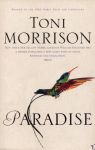
                Paradise_Toni_Morrison

“They shoot the white girl first.” 

Begin with the End in Mind

Writer/entrepreneur Stephen Covey’s sage advice works well when crafting your story beginning. In his 7 Habits of Effective of Effective People, he explains:

Begin with the End in Mind means to begin each day, task, or project with a clear vision of your desired direction and destination, and then continue by flexing your proactive muscles to make things happen.

When writing fiction, the opening is your where you plant the seeds for your plot to grow.  Knowing your destination can help you build a strong beginning. 

The meaning behind Harper Lee’s understated opening in To Kill A Mockingbird is not realized until the climax of the book. The author masterfully weaves the end into the beginning.

When he was nearly thirteen, my brother Jem got his arm badly broken at the elbow. When it healed, and Jem’s fears of never being able to play football were assuaged, he was seldom self-conscious about his injury…When enough years had gone by to enable us to look back on them, we sometimes discussed the events leading to his accident.

To emphasize this expert plotting device when teaching the novel, I have my students reread the opening after they finish the last chapter. They are always amazed by the cyclical structure of this classic novel.

Pick the right POV

Try to establish a distinct voice or tone, especially if you are using first-person point-of-view.  Charles Dickens does it matter-of-factly in David Copperfield by confiding to the reader.

Whether I shall turn out to be the hero of my own life, or whether that station will be held by anybody else, these pages must show.

My YA novel, One Is Not A Lonely Number, opens with a statement from the 13-year-old narrator, Talia.

Eight is my favorite number. I think it’s a beautiful number; it has two-way symmetry, it’s an even number, it’s in my birth date (September 18th) and it’s the color of a blue sky.

More examples of openings with a unique voice or tone.

“I lived with the same cat for nineteen years–by far the longest relationship of my adult life.” 

A Man and His Cat” by Tim Kreider (The New York Times 2015)

My name was Salmon, like the fish; first name Susie. I was fourteen when I was murdered on December 6, 1973.

Alice Sebold, The Lovely Bones

Limit Backstory

A common mistake in first pages is including too much backstory.

Backstory is exposition as opposed to action. It’s info that the reader needs to know which happened prior to the story.

Don’t overload your reader with background details that could easily be put in later on (or not at all). Use exposition only at the point in the story when the reader absolutely needs the information. Otherwise, every line in the opening should move the plot forward.

It’s helpful to get reader/editorial feedback on your story draft. You may find out that your opening really happens on Page 3…or 10, as I did with my first novel and a recent one in progress.

Begin with the Introduction of an Interesting Character

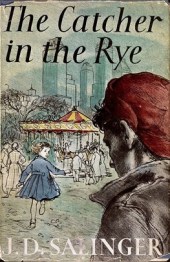
catcher-rye

All these examples immediately make me want to find out more about the character.

“Miss Brooke had that kind of beauty which seems to be thrown into relief by poor dress.”     

George Eliot,  Middlemarch 

“He had jumped a radio tower and a cliff in Norway, but never a bridge. He chose a Wednesday morning when the fog was expected to burn off early and called in sick to work.”                                                                                                              The Casual Car Poll” by Katherine Bell (Ploughshares 2006)

“Mr. Jones, of the Manor Farm, had locked the hen-houses for the night, but was too drunk to remember to shut the pop-holes.”   

George Orwell, Animal Farm

“There was once a boy called Eustace Clarence Scrubb and he almost deserved it.”  C.S. Lewis, The Voyage of the Dawn Treader.

When my brother Fish turned thirteen, we moved to the deepest part inland because of the hurricane and, of course, the fact that he’d caused it.                        Ingrid Law, Savvy

“Check me out. The top two knuckles of my left hand look as if I’d been worked over by the KGB.”                                                                                                                        “This Old Man” by Roger Angell, essay from The New Yorker (2015)

“He was born with a gift of laughter and a sense that the world was mad.”          Rafael Sabatini, Scaramouche (1921)


Writer-once-upon-a-time


While an intriguing first line may hook the reader, you still need to sustain attention. So consider this checklist for your first page.

  • Introduces a compelling protagonist
  • Introduces setting
  • Introduces conflict
  • Conveys tone or mood
  • Raises questions in the reader’s mind
  • Involves some action

You can learn a lot from studying the masters. Pick an anthology of stories and read just the first paragraph of each one. Which stories pull you in?

Poets & Writers Magazine just published noteworthy beginnings from 12 hot-off-the-press books.

Some of my Favorites Opening Lines


“Not every thirteen-year-old girl is accused of murder, brought to trial, and found guilty. But I was such a girl and my story is worth relating even if it did happen years ago. ”      The True Confessions of Charlotte Doyle by Avi.

What’s your favorite opening line?


How to Write a Great Ending: (Why Endings Matter in Fiction and Life)

Endings matter in fiction and life.

The_End

Why is it we can forgive a book’s slow start, a meandering middle, but not a bad ending?

Some endings leave you feeling cheated. Or disappointed. Or plain confused.

You’ve invested your time, money, and heart and you want a payoff at the end.  Endings matter to readers and movie-goers. A lot.  The highly ambiguous ending to the 2014 movie Birdman ignited an intense online debate about what actually happened. Some loved the ending, others hated it.

For years after publishing Gone with the Wind, author Margaret Mitchell was deluged with reader requests for a sequel. Mitchell adamantly refused, saying she purposely left the ending ambiguous because she had no idea whether or not Scarlet and Rhett would be reunited.

Gone_With_The_Wind

So what makes a bad ending? 

I asked my friends and family. Their answers aligned with the advice you’d get in a basic writing workshop.

-Confusing

-Based on coincidence

-It was all a dream

-Contrived

-Too many loose ends

-The hero dies without achieving or seeing his goal/dream

-Manipulative

-Unrealistic

-Too Sad

There’s a great scene in the movie The Silver Lining Playbook when the main character Pat, upon finishing Hemingway’s A Farewell to Arms, throws the book out the window. Pat then wakes his sleeping parents and launches into a rant over the love story’s bleak ending.

“…She dies, Dad! I mean, the world’s hard enough as it is, guys…Can’t somebody say, “Hey, let’s be positive? Let’s have a good ending to the story?”

Turns out, Hemingway considered at least 40 possible endings to the classic 1928 novel. If your curious, a 2012 Library Edition exists containing these alternative endings. 

This brings to mind the wacky physics theory of “parallel universes.   I won’t get into the scientific details behind the controversial concept, but basically, it explores the possibility that other versions of ourselves, our histories, and our outcomes exist simultaneously in multiple universes. (A premise portrayed many a time in science fiction tales.) 

So, let’s say you’re feeling sad and regretful about letting a lover go. Perhaps you can take comfort in the idea that somewhere out there your replica is enjoying life with this missed love.

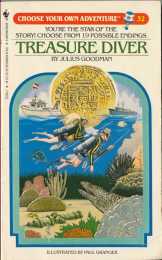
In the 1980s and 90s, the widely popular children series, Choose Your Own Adventure, allowed readers to assume the role of the protagonist.  Every few pages,  the reader gets to make choices that determine the outcome. The fun part is getting the chance to explore several possible endings.

Choose_Your_Own_Moon

                            Choose_Your_Own_Treasur_Diver


Each book’s introduction affirms the power the reader holds. 

“There are dangers, choices, adventures, and consequences…but don’t despair at anytime YOU can go back and alter the path of your story, and change its results. 

If only real life were like that.


How do writers craft the perfect ending to their story?

Some decide on the ending at the very beginning and fill in the rest. Others follow a detailed outline which builds to a specified ending. Others writers like to journey with their characters and allow the ending to unfold. The process becomes an exciting discovery.

Best-selling thriller writers Lee Child and Lisa Scottoline described this process in a recent NYT podcast. After getting a feel for the tone of the book, Lee Child just sits down to write and sees what happens.  Lisa Scottoline knows only the beginning when she starts writing a novel. As she reaches each new point, Lisa asks herself, “Okay, now what?”  The prolific author says this process mirrors life.

I rarely know the ending of a story before I write. Even if I have a sense of the story’s conclusion, I often change my mind or consider alternatives. In my novel, One Is Not A Lonely Number, one of the characters reveals a secret toward the end.  I didn’t even know what it was until I got there. 

In my new short story, “When We Were Bad”, I knew one of the characters would end up in the wrong place at the right time but wasn’t sure if she’d get out alive. Making that decision ultimately changed the final paragraph which I rewrote several times.

But even when you decide on the ending of your story, how do you know it works?

What makes a good ending?

This is a trickier question than what makes a bad ending. According to the character Holden Caufield in Catcher in the Rye,

“What really knocks me out is a book that, when you’re all done reading it, you wish the author that wrote it was a terrific friend of yours and you could call him up on the phone whenever you felt like it.”

I love this quote and have experienced the feeling myself.

The answers my friends gave me regarding a good ending were more about emotion–how a story ending left them feeling.

-Happy(ish)

-Enlightened

-Moved

-Astonished

-Transformed

-Curious

-Wishing it never ended

The most common answer was satisfied.  Hmm. Makes me think of a good meal. What is satisfying to one reader may cause another to toss the book out the window.

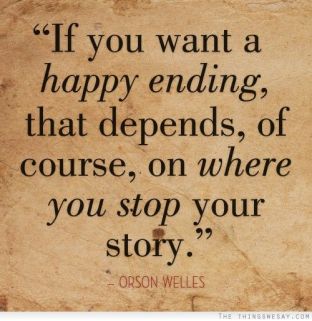
. If-you-want-a-happy-ending-that-depends-of-course-on-where-you-stop-your-story.-Orson-Welles

So how does a writer choose?

A while back, I came across an answer. 

A good ending to a plot must be both inevitable yet surprising. 

I’ve been pondering this paradoxical advice since ever since.

Thriller writer, Meg Gardiner, (also interviewed in the NYT Podcast) summed up the above axiom in her 2015 blog post as: 

Amazing! Not what I expected, but exactly what I expected.

Try putting your favorite books and movies to this test.

For me, this played out in the novel Me Before You by Jojo Moyes(Don’t bother with the movie version.) It’s a contemporary romance between an unlikely pair who seem to hate each other at first then fall deeply in love. At the end of the book, one of the characters makes a choice that made me cry.  I thought about it for days. At first, I was sure it was the wrong ending. But as I reflected  (and debated with a friend), I could see the author had planted the seeds for what was to come. The reader doesn’t want this ending, is hoping until the last page that it won’t happen, but it does.  The conclusion is unsettling, thought-provoking and, indeed, “inevitable, yet unexpected.”

Few endings, in fiction or life, are perfect.

Story endings can leave us sad and still be a good ending. Or, perhaps, the right ending.

What are your favorite or worst book/movie endings? 

If you’re a writer, do you plan the ending ahead of time?

The_End2.jpg

How To Keep Writing When Life Throws You A Punch

How do you keep writing when life throws you a punch?

Rolling-With-Lifes-Punches

So you’ve been writing your 500 words a day, researching your new novel, making the revisions your editor suggested, starting a new essay, approaching an article deadline… when life throws you a punch. Your boyfriend leaves. Your kid is failing school. Your mom breaks her hip. You have a major fallout with a friend. Your mammogram is suspicious.

You’ve had one of those days. Or weeks. Maybe one of those months. You’re knocked off kilter. And so is your creative output.

Your focused mind becomes a traffic jam of negative thoughts. The words sit lifeless on the page. Whatever you’ve written, now seems crap.

Trying to write a book is challenging on the best of days. Now, the sadness or worry you’re feeling is compounded with each passing unproductive day. The fewer words you write, the more frustrated you become. 

Writers_Block

On days like these, I wish I were the kind of person who can don emotional blinders and keep churning out the pages. 

Writing itself sustains me during ordinary times, which is why it is essential to keep at it during hard times. Yet sometimes I find this extraordinarily difficult, particularly during the past two and a half years since my father was killed. The traumatic experience shed my already thin skin and it hasn’t grown back. Despite my healing, my brain remains sensitive to shock and perceived threats.  It doesn’t take much to knock me over. 

It’s happening right now.

How do you keep writing when life throws you a punch? 

Notice I didn’t say “if” but “when,” because it will happen. Often in waves. Disappointment. Anger. Hurt. Shock. Grief. Worry.  Emotions that can cut through creativity. 

I’d love to hear what’s worked for you. Here are a few things I’ve tried.

1. Take time out—but not too long

You wonder how you can possibly write anything worthwhile when you feel so bad. Your first impulse is probably to cast writing aside and attempt to numb yourself or engage in distracting activities.  Give yourself permission to have a bad week, to take time off—just try to designate a time limit. When a student I advise is crushed about a college rejection, I give him 3 days to mope, rant, or binge watch Netflix. Then it’s time to move on. So go ahead, curl up on the couch…just don’t stay there.

2. Switch writing gears

If you find it impossible to connect with your current project, try starting something new (but not too big).  Revise/edit an older manuscript.  Work on submissions.  Engage in research or brainstorm ideas.  Or write in a different genre. (Like I’m doing now with this blog post.) Read something inspiring. Journal writing can help you grapple with the problem and clear your mind.  Any writing you can do will make you feel better. 

3. Expect something good

There’s a Yiddish saying that originated in Chassidic teaching, “Tracht Gut Vet Zien Gut “—“Think good, and it will be good.”  The idea is that positive thinking will not only help you weather hard times but can actually make positive things happen.  I take this to mean that if you expect good things, you are more likely to attract them. The Universe may surprise you by sending a salve for your wound. Strange as it seems, this has worked for me.  Just this week, when feeling my lowest, I heard from a special person I hadn’t spoken to in years but had been recently thinking about. I also had a story accepted for publication.

Sometimes, though, the punch is more than a bad week or a misunderstanding. It’s a serious illness. The break-up of a marriage. The death of a loved one.  It may take a lot more time to find your words again, to rise out of the darkness. During such trials, I hope you have a special person to lift you up. 

Famed American novelist, Henry James, wrote, in July 1883, a most tender and compassionate letter of advice and comfort to his friend and fellow writer, Grace Norton of Boston.  Grace was despondent after the death of a family member.  Henry encouraged his dear friend not to give up on life.

My dear Grace, you are passing through a darkness in which I myself in my ignorance see nothing but that you have been made wretchedly ill by it; but it is only a darkness, it is not an end, or the end. Don’t think, don’t feel, any more than you can help, don’t conclude or decide—don’t do anything but wait. Everything will pass, and serenity and accepted mysteries and disillusionments, and the tenderness of a few good people, and new opportunities and ever so much of life, in a word, will remain.

James’s concluding words to Grace lift me each time I read them.

Sorrow comes in great waves…but it rolls over us, and though it may almost smother us… we know that if it is strong we are stronger, inasmuch as it passes and we remain. It wears us, uses us, but we wear it and use it in return; and it is blind, whereas we, after a manner, see.

Cemetery_Scene
Paul Christian Gelutu

You can read the letter in its entirety at  Letters of Note–Henry James or hear it on YouTube.