I’m a big fan of poet MaryOliver (1935-2019). Her passion for the natural world intertwined with intense human emotion both inspire and challenge our assumptions.
Credit: Orion Magazine
“Wild Geese” (2004) is one of her most popular and often quoted poems. When I reread it recently, I thought it particularly suited for our times.
American culture is rife with public scrutiny, shame, ridicule, and censorship. Daily messages of outrage tell us that we don’t measure up. We are condemned for our beliefs and even whom we love.
“Wild Geese” is a reminder that you are enough. You don’t need to live someone else’s definition of what is “good”.
You can move past your mistakes. Each day begins anew. No matter your err of yesterday, the sun still rises and sets.
You need not be weighed down by guilt or shame. You can fly wild and free.
WILD GEESE
You do not have to be good.
You do not have to walk on your knees
For a hundred miles through the desert, repenting.
You only have to let the soft animal of your body
love what it loves.
Tell me about despair, yours, and I will tell you mine.
Meanwhile the world goes on.
Meanwhile the sun and the clear pebbles of the rain
are moving across the landscapes,
over the prairies and the deep trees,
the mountains and the rivers.
Meanwhile the wild geese, high in the clean blue air,
are heading home again.
Whoever you are, no matter how lonely,
the world offers itself to your imagination,
calls to you like the wild geese, harsh and exciting —
April 2021 marks the 25th anniversary of National Poetry month.
The honorary month was first created by the Academy of American Poets in partnership with Jonathan Galassi, President of Farrar, Straus & Giroux in 1996.
Poetry has been my pandemic companion. Comfort, connection, and inspiration.
With spring comes hope. Let’s celebrate!
Join me in spirit at the Academy’s first virtual gala celebration, Poetry & The Creative Mind. Enjoy an evening championing the power of poetry in our culture and lives.
Date: Thurs., April 29th, 7:30 pm. Event chair, Meryl Streep.
Registration free. Donations appreciated. Proceeds go toward poetry education programs and materials for classroom teachers. Register here.
“Inelegantly, and without my consent, time passed.” ~ Miranda July
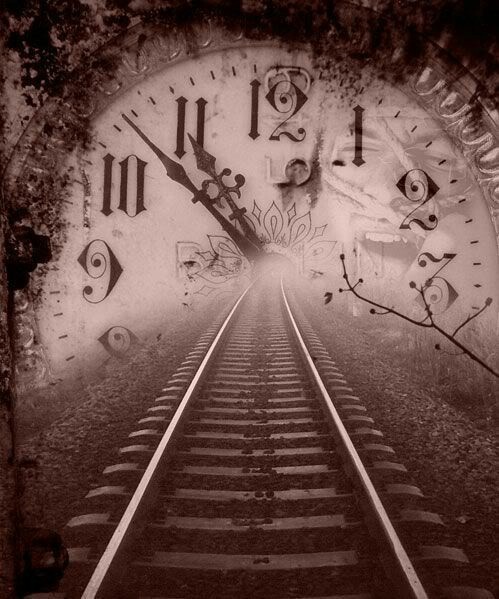
As National Poetry Month draws to a close, I bring you 5 powerful poems about the nature of time. The last one is my creation.
Time is very slow for those who wait; very fast for those who are scared; very long for those who lament; very short for those who celebrate; but for those who love, time is eternal.
~William Shakespeare
The Trees
The trees are coming into leaf
Like something almost being said;
The recent buds relax and spread,
Their greenness is a kind of grief. Is it that they are born again
And we grow old? No, they die too.
Their yearly trick of looking new
Is written down in rings of grain. Yet still the unresting castles thresh
In full grown thickness every May.
Last year is dead, they seem to say,
Begin afresh, afresh, afresh.
~Phillip Larkin
The butterfly counts not months but moments, and has time enough.
Time is a wealth of change, but the clock in its parody makes it mere change and no wealth.
Let your life lightly dance on the edges of Time like dew on the tip of a leaf.
~Rabindranath Tagore
Forever
I had not known before Forever was so long a word. The slow stroke of the clock of time I had not heard.
‘Tis hard to learn so late; It seems no sad heart really learns, But hopes and trusts and doubts and fears, And bleeds and burns.
The night is not all dark, Nor is the day all it seems, But each may bring me this relief— My dreams and dreams.
I had not known before That Never was so sad a word, So wrap me in forgetfulness— I have not heard.
“Poems are made from the lives lived, borne out of experiences and shaped by solitary thought.” ~ Jill Bialosky
I just finished reading a wonderful new book that I picked up solely because of its intriguing title: Poetry Will Save Your Life by Jill Bialosky (Atria Books 2017). The Kirkus Review sums it up well: “An emotional, sometimes-wrenching account of how lines of poetry can be lifelines.”
This short memoir is centered on specific poems that have brought the author comfort, meaning, inspiration, or understanding during pivotal moments in her life. Bialosky organizes the book by themes such as Shame, Memory, Escape, Passion, First Love, and Mortality. A brief bio for each poet is included which deepens our awareness of the poem’s meaning. Each poignant chapter could stand alone.
Throughout the book, Bialosky reflects on the profound lessons and meaning poetry can offer us. “Poems are composed of our own language disordered, reconfigured, reimagined, and compressed in ways that offer a heightened sense of reality and embrace a common humanity.”
Whether you are a poetry lover or haven’t read a poem since high school, there is something in this book for everyone.
Ms. Bialosky, an award-winning poet, novelist, and book editor, never veers off into English professor mode when reflecting on the poems. Rather, she selects key phrases or themes that connect with her experience. Here she examines a stanza of E.E. Cummings poem, somewhere i have never traveled, gladly beyond.
(i do not know what it is about you that closes
and opens;only something in me understands
the voice of your eyes is deeper than all roses)
nobody,not even the rain,has such small hands
Bialosky explains that the “use of the word voice as a modifier for eyesallows the reader to experience how much the speaker of this poem “sees” into his subject. Then she intuits the poet’s question: “How is it that one person can unlock something private within us? Or awaken things in us we fear?”
Bialosky writes about the death of her first child shortly after birth. She shares the never-ending pain of her beloved young sister’s suicide. In the chapter of grief, Bialosky comments on Auden’s poem, Musee Des Beaux Arts.
“W.H. Auden documents the otherworldly state of grief and tragedy; how it strikes families while others are doing the dishes or taking the dog for a walk. Even dogs continue on their doggy life.”
Anyone who has experienced the death of a loved one can connect to this paradoxical state of being: How can everyone else just go about their business when my beloved is gone?
Bialosky says, “I will spend years trying to capture the experience of suicide in a prose work…Poems remain a sustaining source of comfort.
Like Jill Bialowsky, words, too, have been an integral part of my healing after losing my father—words shared with a therapist, words of comfort from family and friends, words I have written, and words of those who have crawled through the tunnel of trauma and grief and come out the other side.
It has been exactly two years since my father’s tragic death. In some ways, this is unfathomable. How could two years have passed? This disbelief has me thinking more about the elusive nature of time. If time is constant, why do our brains perceive it so differently? Why does time slow down when we grieve and speed up when we are happy? Why when we are waiting excitedly for a special event, do the days not move fast enough?
For centuries, poets have pondered time’s mystery. Consider Henry Van Dyke’s poem, Time Is.
Time is Too Slow for those who Wait, Too Swift for those who Fear, Too Long for those who Grieve, Too Short for those who Rejoice; But for those who Love, Time is eternity.
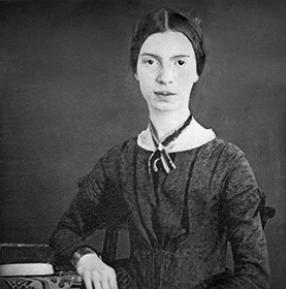
Emily Dickinson expresses this idea of expectation and waiting in her poem, If You Were Coming In The Fall.Although the agoraphobic poet spent most of her life inside her Amherst, MA home, Dickinson enjoyed her share of romantic interests. The following poem is thought to be attributed to a family friend, Judge Otis Phillips Lord, who died 2 years before Emily.
If you were coming in the Fall,
I’d brush the Summer by
With half a smile, and half a spurn,
As Housewives do, a Fly.
If I could see you in a year,
I’d wind the months in balls—
And put them each in separate Drawers,
For fear the numbers fuse—
If only Centuries, delayed,
I’d count them on my Hand,
Subtracting, till my fingers dropped
Into Van Dieman’s Land,
If certain, when this life was out—
That yours and mine, should be
I’d toss it yonder, like a Rind,
And take Eternity—
But, now, uncertain of the length
Of this, that is between,
It goads me, like the Goblin Bee—
That will not state— its sting.
~
Jill Bialowsy concludes that “poetry gives shape to those empty spaces within us that we have no words for until we find them in a poem.”
Do you have a favorite poem or one that holds special meaning?






 EVELYN KRIEGER