Finding Inspiration for Creating Art

Inspiration_2018


“There were so many frightful times when I was totally “unilluminated” and feared that I could never write again.”   

                     ~Carson McCullers, Illumination and Night Glare


Where do you find inspiration when the well is dry, the light dim?  How do you engage in creative work amidst the onslaught of headlines of terror attacks, mass shootings, natural disasters, and White House insanity?  As you attend to the relentless demands of everyday life, how do you carve space for illumination?

Here are some of my ideas and those gleaned from other writers and artists.

l.  Start the day with beauty.

flowers-background-butterflies-beautiful-87452

Do you start the day with the news report? Is your phone screen the first image your eyes take in?  This is a hard habit to break but doing so can do wonders for your mood and muse. I know it’s hard to think about beauty when you’re getting ready for work or trying to get the kids off to school. But taking a moment to notice beauty, rather than the news headlines, can lift your spirit.

Instead of checking your Twitter feed, try feeding your soul.  Take in scenes of nature.  Research studies have demonstrated that just looking at nature scenes can reduce stress and increase pleasant feelings. This alone may open the door to inspiration. 

The beauty of language soothes and inspires me. Every morning at breakfast, I try to read a poem. This warms up my brain for creative work which, for me, is usually done early in the day. 

2.  Take A Walk

Walking has long been considered a way to open the mind. Naturalist, writer, and avid walker Henry David Thoreau wrote in his journal,  “Methinks that the moment my legs begin to move, my thoughts begin to flow.”  Walking is especially helpful for me when I’m about to begin a new writing project. Walking engages our senses, clears our mind of clutter, and gets the blood flowing—all helpful for finding that creative spark. (If you’re interested in learning more about the cognitive benefits of walking, check out Why Walking Helps Us Think, New Yorker, 9/3/14.) 

3.  Create a Playlist

It goes without saying that music can inspire.  Music can also serve as an anchor to a specific time in your life and take you right back to the associated emotions and memories. I’ve created mood playlists—melancholy, tense, romantic, happy—to help me get into a specific scene. Some writers use a specific playlist while working on a novel. Young adult author Rainbow Rowell’s main characters bond over 1980’s music. The author listened to these songs while drafting her novel, Eleanor & Park. (Rainbow shared the playlist with her fans on Spotify and YouTube.) 

4.  Learn from the Masters

StephenKing

All art is about craft, so learn your craft. Read wisdom from the masters–Virginia Wolfe, Anne Lamott, Stephen King, Chekov, Ursula Le Guin, John Gardner. Take solace that even the greats lose their muse (and sometimes their minds).  The successful artists you admire all doubt themselves, muddle through the middle, give up on manuscripts, have dry spells, and get rejected—just like you!   I keep several craft books near my desk. One of my favorites is Stein on Writing by Sol Stein.  When I sit down to write, I open one book to a random page and absorb the lesson at hand.  I also turn to my collection of inspiring quotes from writers and other creative thinkers.

And as imagination bodies forth

The forms of things unknown, the poet’s pen

Turns them to shapes and give to airy nothing

A local habitation and a name.

  ~William Shakespeare (A Midsummer Night’s Dream)

5.  Try Pen and Paper

If you always plan, outline, and compose on a computer, try paper and pen for a change. This not only removes the distraction of the internet, but also the delete button. (How many times have you deleted a sentence or idea 5 seconds after typing it?) Writing by hand forces you to slow down, to more closely consider your thoughts and feelings. And just by engaging a different process for creative inspiration, your brain is primed for novelty. You’re ready to brainstorm. Jot down every idea, question, and connection that pops into your head. Don’t censor. Explore all possibilities.
Nabokov_Quote


7.  Stay Curious

 Keep asking questions. Ask: What If? Read widely. Wonder. Talk to people who are very different from you. Jot down snippets of interesting conversation. Visit new places. Collect things. I like buying old postcards and photographs in antique shops and then imagining the stories behind them. 

7.  Show Up

Sometimes its best to just get started. Make art a daily companion, not an occasional visitor. Instead of saying “someday”, choose someday—like today.  Or as Stephen King bluntly states: “Amateurs sit and wait for inspiration, the rest of us just get up and go to work.” 

Exercise the writing muscle every day, even if it is only a letter, notes, a title list, a character sketch, a journal entry. Writers are like dancers, like athletes. Without that exercise, the muscles seize up.      ~Jane Yolen

8.  Trust the process.

If you’ve ever suffered from insomnia, you know how the anxiety of waiting for sleep and worrying that it won’t come actually delays its arrival. I think the same can be true for inspiration.  Instead of fretting that you don’t have the idea, the words, the vision, the melody—you may just need to surrender. Be patient. Wait a while. Some ideas arrive banging on your door, others gestate for years. Keep listening.

 “The statue in the stone. How does the artist find that, see it, before it’s visible?”

                     ~Ursula K. Le Guin

And sometimes in order to go forward, you have to first meet the place where you are stuck and grapple with it on the blank page.
A_Place_of_Darkeness

 When my father was killed, I felt a part of me die with him. Afterward, I could barely speak, let alone write. Inspiration eluded me. Only after braving the demon, could I begin to create again. I didn’t want to write about the experience; I needed to.  Inspiration isn’t always rosy and warm. Inspiration can come from a place of darkness. And by entering this place with courage and vulnerability, you can create something that illuminates.

My latest writing is published in the December issue of Hippocampus Magazine.  It’s the hardest essay I’ve ever written.

How do you capture inspiration?

Where Do You Get Your Ideas?

ideas2One of the most common questions I’m asked when people hear I write fiction is: Where do you get your ideas?  The answer is simple: ideas are never the problem. I have too many ideas.

While smack in the midst of  the draft of my second novel, I got an idea of another book. I was really excited about the idea, but I forced myself to put it on hold.

Where do I get my ideas?  In snippets of conversation overheard in a coffee shop. Newspapers stories. Obituaries. Historical events. Dreams. Childhood experiences. Traveling. Imagination. Art. Issues I care about.

When my writing workshop students get stuck, here are some ways I help them generate  ideas.

l.  Ask What if?  What if you find out your best friend was living a double life? What if you discovered you suddenly could speak a language you were never taught? 

2. Collect interesting images of people whom you do not know. Decide to bring one to life. What is her name?  What does she want most in the world? What is her story? 

3.  Collect images of awesome, weird, and intriguing places. Use the image as a jumping off point for a setting. What is magical about this place? What happened there?

4.  Think of a funny incident that happened to you. Now retell the story with a different character and ending.

5.  A character receives a map in the mail. Describe the map. Who sent it? Why?

6.  Look for story starters.  Here is one I gave my students for a flash fiction lesson. She gave me the black box for my birthday.  This opening generated many creative short pieces!

7.  People watch. (My students are always surprised when I admit to eavesdropping in public places.) Imagine a secret someone may be keeping? 

Most likely, you’ll have more story ideas than you’ll ever have time to write. (I certainly do.)

I think most writers would agree that ideas are all around us if we take the time to look. The real challenge is not in finding the idea but in shaping it into a compelling story.

Beginning writers put too much emphasis on finding the idea. The story idea is only the first step of your journey. The real story unfolds during the long trek to The End. One of the fun things about writing fiction is the process of discovery. You may think you know where your character is going until she grabs the reins and changes direction.

When I was working on my novel One Is Not A Lonely Number, I knew the character Gabrielle has a secret. I just wasn’t sure what it was. I kept on writing the story, thinking about Gabrielle, listening to her, until one day I just knew. It felt magical.

Stephen King writes about this process of discovery in his memoir On Writing :“…my basic belief about making stories is that they pretty much make themselves.” He starts with the situation first and then develops the characters. And he never knows the ending ahead of time.

So don’t sit and stare at the blank page. Start writing something. Anything. Don’t over think the process. Just keep writing. Ask yourself questions along the way. Let your idea morph into other ideas. See where your characters lead you.

Enjoy the journey!


National Novel Writing Month–Yay or Nay?

Image

When I became a mother, I couldn’t wait for all the things I would teach my kids.

I wanted to introduce them to music, dance, and art. I wanted them to have happy associations with Jewish observance. I wanted to inspire them to be lifelong learners and book lovers.

What I didn’t expect was how much my kids would teach and inspire me. My oldest daughter encouraged me to write a children’s novel which resulted in an award-winning book.

My son continues to inspire me to not “sweat the small stuff” and to stay positive.

My youngest daughter taught me to trust that she is learning, even though she is not in a traditional school.  Lately, she has been a beacon of light as I crawl through the tunnel of discouragement regarding my second novel  attempt. She understands my battle with perfectionism and, fortunately, does not seem to suffer from that condition.

“You need to try NaNoWriMo” she told me.

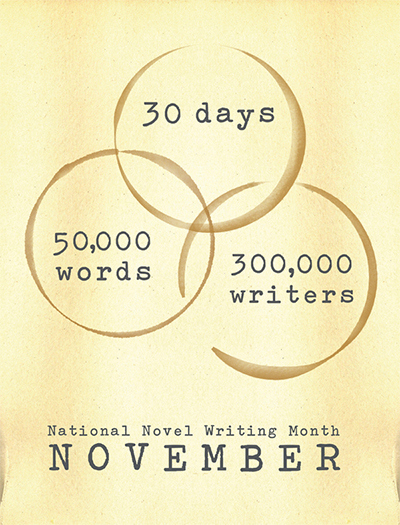
She was referring to National Novel Writing Month. Every November thousands of aspiring writers sign on to the project website. Their goal: write a quick first draft of a novel–in a month. That’s 50,000 words in 30 days!  Of course, not everyone succeeds, but the process itself is valuable–so they say.

“It’s all about silencing your inner critic. At least for a month,” Audrey tells me, fully aware of my nemesis.

Audrey has participated in the Youth Division for the past few years. She enjoyed the pep talks, the writing forums, and the rush of seeing her word count rise.

While I enthusiastically supported her participation, NaNoWriMo sounded like torture to me. I had several reasons for not signing on.

l.  I’ve already written a novel.

2. I’m not a fast writer.

3. I hate writing a big long mess.

4. November is a very busy month.

5. I have other writing contests to work on.

6.  I could never win.

7.  Did I mention that I could never write 50,000 words in a month?

You get the idea.

Of course, Audrey has a counter argument for each of my arguments.  “What have you go to lose?” she finally huffed, after I stubbornly clung to my excuses.

I was reminded of my father. Growing up, I suffered from a lot of worry.  Whether is was speaking in front of the class or trying something new, my anxiety would get in the way.

“What’s the worst thing that can happen?” my father would ask.

Which, today, inspired me to ask myself: What’s the worst thing that could happen by committing myself to NaNoWriMo? 

Answer: 1.  I write a bunch of garbage.  2. I don’t reach the goal.

Hmm. Not the end of the world by any means.

Then I suddenly thought of another question.  What’s the best thing that might happen? 

Answer. 1. I get back on track with the story I want to write. Even better: 2. I get in the flow and churn out a rough draft that gives me something to work on.

I hesitated to the last minute. I thought about being a role model for my writing workshop students (whom I encouraged to enter the Young Writers NaNoWriMo).

So I took the plunge and registered. This is my public announcement.

“Oy, “I’ll never write 50,000 words,” I said to Audrey immediately afterward.

“Mom!”

“Okay. I take it back.”

Image

The next day I got the first NaNoWriMo pep talk in my inbox. It was from award-winning YA author, Rainbow Rowell.

Wow, she was describing my every thought regarding National Novel Writing Month. Here’s an excerpt from her most excellent post.

Dear Writer,

I was very skeptical about NaNoWriMo at first.

It seemed like something that amateur writers would do. Or young writers. People who needed to be tricked into finishing     their books. I’d already written two books by October 2011, and sold them to publishers, and I couldn’t imagine writing either of them—or anything good—in a month.

That’s not writing, I thought, that’s just piling up words. But then I thought about how wonderful it would be to have a pile of 50,000 words… 

And guess what? Ms. Rowell’s NaNoWriMo first draft ended up becoming her recently published novel, Fangirl.

Her words hit my motivation button. Time to get writing.  Fast!

How do your children inspire you? Are you a NaNoWriMo participant?

Writing From A Place of Honesty

Image

 I love reading memoirs. I am fascinated by how a writer structures the chaos and complexities of a life into a narrative.  I also wonder how you get over the fear of exposure, of being judged, of hurting friends and family? As Anne Lamont says, “We write to expose the unexposed.”   How many writers out there still fear exposure, though, when we live in an age of overexposure?

I am a private person and have become more so as I’ve gotten older.  In this cyber age of platform building and social networking, no writer is an island.  Nor can she afford to be.  I may have the life material to craft a compelling memoir, but I am not ready to run naked through the streets. And I may never be. For now, I prefer to select excerpts from my life. Exploring ideas, insights, and truths in this way allows me to both shape and contain the experience and still keep some curtains closed.

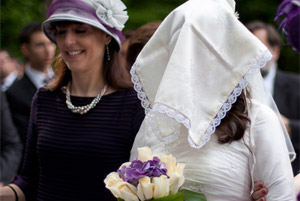
This June, I opened a curtain when my essay, “Letting Go” was published in Tablet Magazine.  The personal essay expressed my mixed feelings about my 20-year-old daughter’s engagement and marriage. I hoped my experience would help other parents of kids who take-off early.  Tackling this particular topic was a big leap in terms of my comfort level. The published piece is much different than the one I had originally submitted.  The editor, Wayne Hoffman, pushed me to dig deeper–to write from a place of truth and honesty–from the heart. I almost didn’t make the requested revisions, but once I worked through the fear of vulnerability, I found my real voice. The result was very satisfying.  An added bonus was when the Tablet editor called to say how much he loved my revised essay.

Readers responded to this honesty. The online comments and email feedback, mostly positive, provided an instant connection with my readers, which was both exciting and scary. Here is one of my favorites, (sent via email).

Evelyn

I’m sitting at my desk at work wiping tears from my cheeks. Your article is so beautiful and right on target. It resonates so deeply- you captured the emotions and dialogue perfectly.  

“Letting Go” was picked up by the New York Times Motherlode blog the same day it appeared in the Tablet. Instantly, my audience (and exposure) widened. Blogger KJ Dell’Antonia invited readers to share thoughts on the topic of marrying at a very young age.  I was surprised by how many NYT commenters seemed not to have read my entire essay, yet still had a strong opinion about it.  Writing openly about your life opens you up to the critics, of course. No dodging that bullet. The diverse reactions on Motherlode reminded me how we each project our life view into what we read and that being “open-minded” is easier said than done.

So, my advice to other private-by-nature people who want to write about very personal experiences in today’s online world? Grow a thick skin; you won’t die of exposure.

And what about you? Do you find it hard to draw the curtains when you write about your life?  How do you decide what is okay to reveal about family members, especially your children?  Or are you happy to run naked through the streets?

How many books will you write this year?

Sunday afternoons I usually devote to writing projects.  This Mother’s Day, after a little prompting from my family, I took the entire day off.  And I enjoyed myself!  That is, until later that evening when a NY Times headline caught my eye: Writer’s Cramp: In-E-Reader Era, a Book a Year is Slacking.

Oh, my.

Those commercial fiction writers who previously managed to put out a book a year are now “pulling the literary equivalent of a double shift.”  These writers, whom we love and hate, are churning out extras–short stories, novellas, e-books– to satisfy their impatient readers whose attention spans have shortened, thanks to our revved up world.

Thriller writer Lisa Scottline has revved up her daily quota to 2000 words.  That translates into a 12/7 workweek.

Best-selling literary novelists are, so far, off the hook. (Go ahead, take your ten years. We still love you!)  Since I don’t belong to either camp (not yet), I’m wondering what to make of this madness.  Between book marketing, building my platform, speaking engagements, circulating short stories, writing query letters, entering competitions, raising my kids, and the Other job, my next novel is still in note form.

Maybe I could offer this for 99 cents while my fans await the real thing.

Let’s suppose that you could (or do) write full-time?  How many books could you (would you) write in one year?