
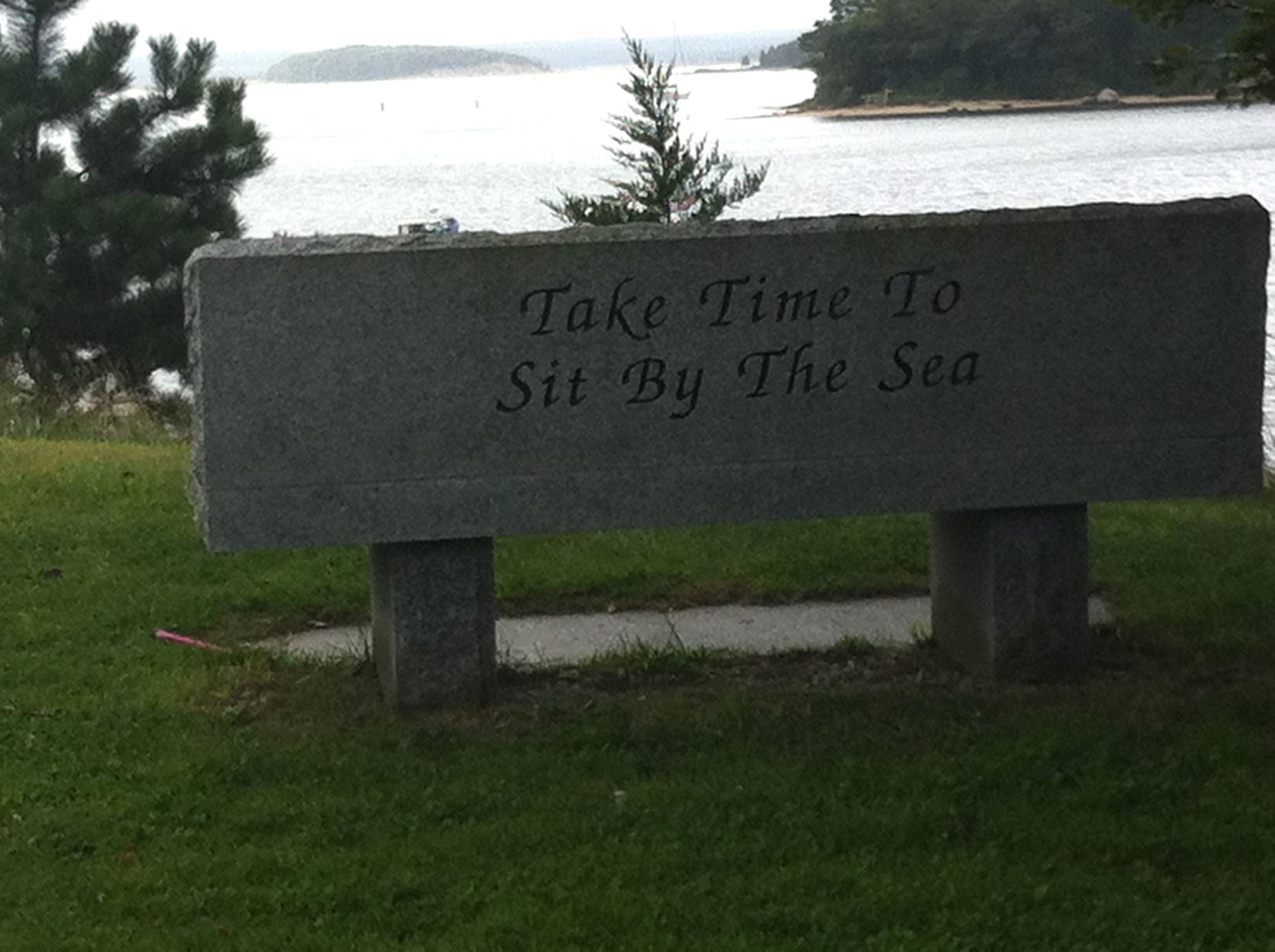
As we were packing for a family trip to Cape Cod, my husband asked me if I was taking my lap top.
“Are you kidding?” I replied.
“What I mean is, are you planning on working?” he said.
My answer, of course was, “Of course.”
By working, he meant writing. “Isn’t it a good idea to take time off for a vacation?” he asked. “Clear your mind for new ideas? Come back refreshed?”
What he meant was: How much time are you going to be off (alone) writing?
Anyone who is married to a writer will have this conversation.
In his memoir, On Writing, Stephen King says that when he is in the middle of a project he writes every day, including Christmas, Fourth of July, and his birthday. (I remember rereading that part a few times.) King advises aspiring writers not to take off more than a day when they are in the midst of crafting a story. “You’ll lose the urgency and immediacy of your story if you do.”
I recently heard novelist Richard Ford, author of Canada, describe similar work habits.
But these guys are older, empty-nester, best-selling, full-time writers who probably don’t do the laundry. Right?
Novelist and writing teacher, Aimee Bender, wrote about the importance of a regular writing routine in her essay,“A Contract of One’s Own” . Aimee’s writing self-contract has rules, consequences, and rewards. Aimee writes daily for two hours, in the same place, with no distractions or breaks, 5-6 days a week, rain or shine. And she has been at it for 17 years. “Writing everyday can be a powerful action, a gesture of belief in one’s own imagination…”
While I’m a believer in taking time off for renewal (heck, why not for fun, too?), our family vacation to Cape Cod coincided with the time I devote to writing–the summer. I enjoy having a break from teaching, scheduling, and chauferring my kids around. I love taking my laptop outside on our sunny patio and being able to write for a few hours straight.
So as our family packed up the van, I felt like I had already been on vacation. Why should I take a double vacation? I worried that a week off from my writing would not only put me behind, but put me on the slippery slope to Procrastination Island.
Of course I didn’t want to ruin it for everyone else. And since I am fighting those workaholic tendencies, I compromised. I told my husband that I’d write just an hour a day, maybe early in the morning before everyone gets up, or late in the evening. And then, I’d turn into a fun person.
Here’s what really happened. After a day at the beach, I crashed at 9:00 pm. Then I overslept. Then my daughter visited for a couple days with her husband and baby and I wanted to spend every minute with them. Then my fourteen-year-old daughter asked me to eat an early breakfast with her on the beach. (Lovely.) Then my husband suggested we have coffee at the cafe around the corner from our rented house.
I didn’t write a word the entire week.
But…I did let my characters visit and show me their wild side. As I walked along the shore, new writing ideas rolled in like gentle waves. And yes, I did come back refreshed and renewed.
Do you take vacations from writing? If so, when, and for how long?


 EVELYN KRIEGER